Import endpoints from Postman collections, cURL commands, or Swagger specs into Rocket.new and bind responses to UI components automatically.
Import API definitions from Postman, cURL, Swagger, or OpenAPI specs. Rocket generates all the connection code, error handling, and data mapping. You pick the endpoint and the UI element.
API imports are only available on the web browser. They are not supported in the Rocket mobile app.
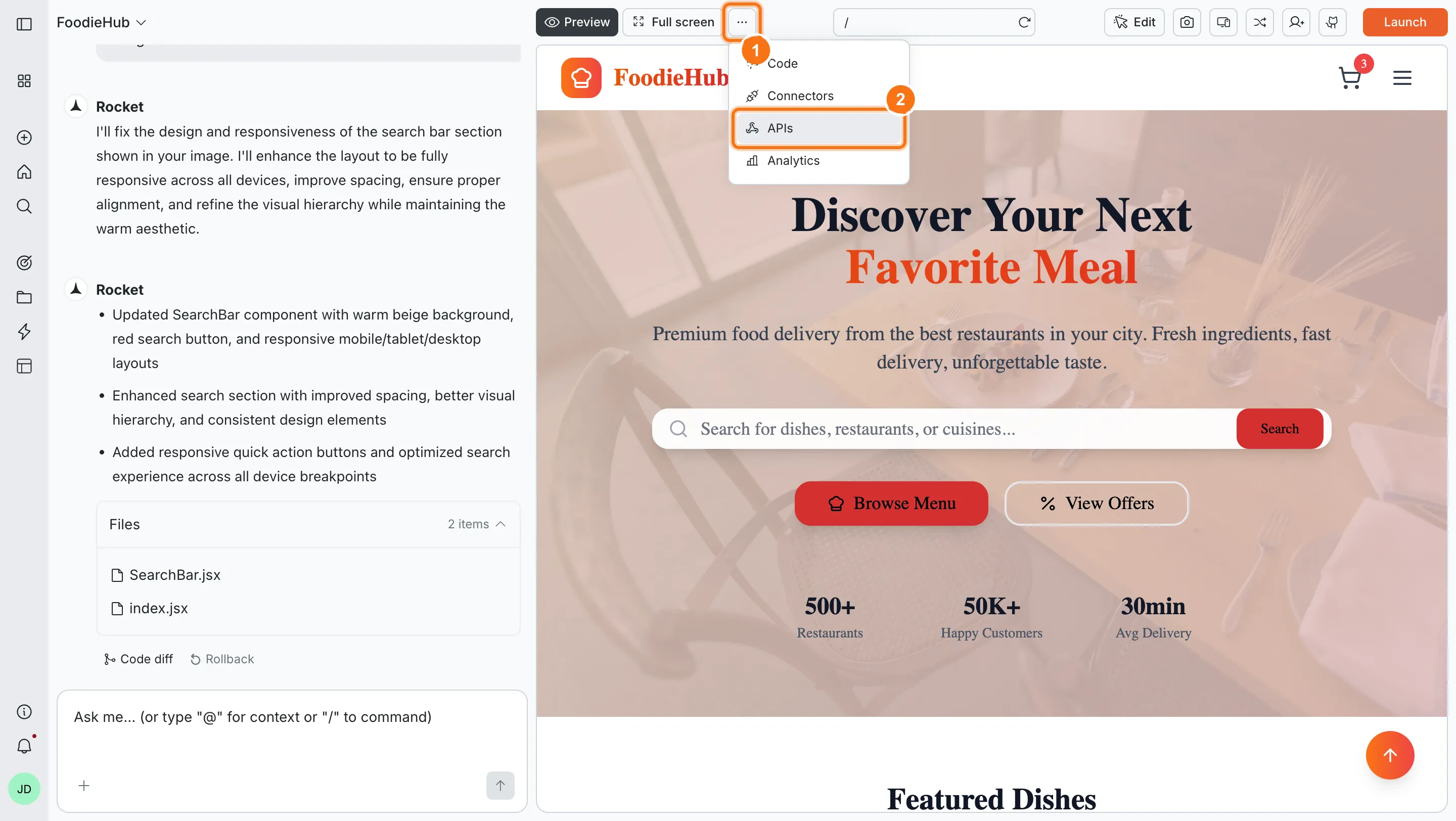
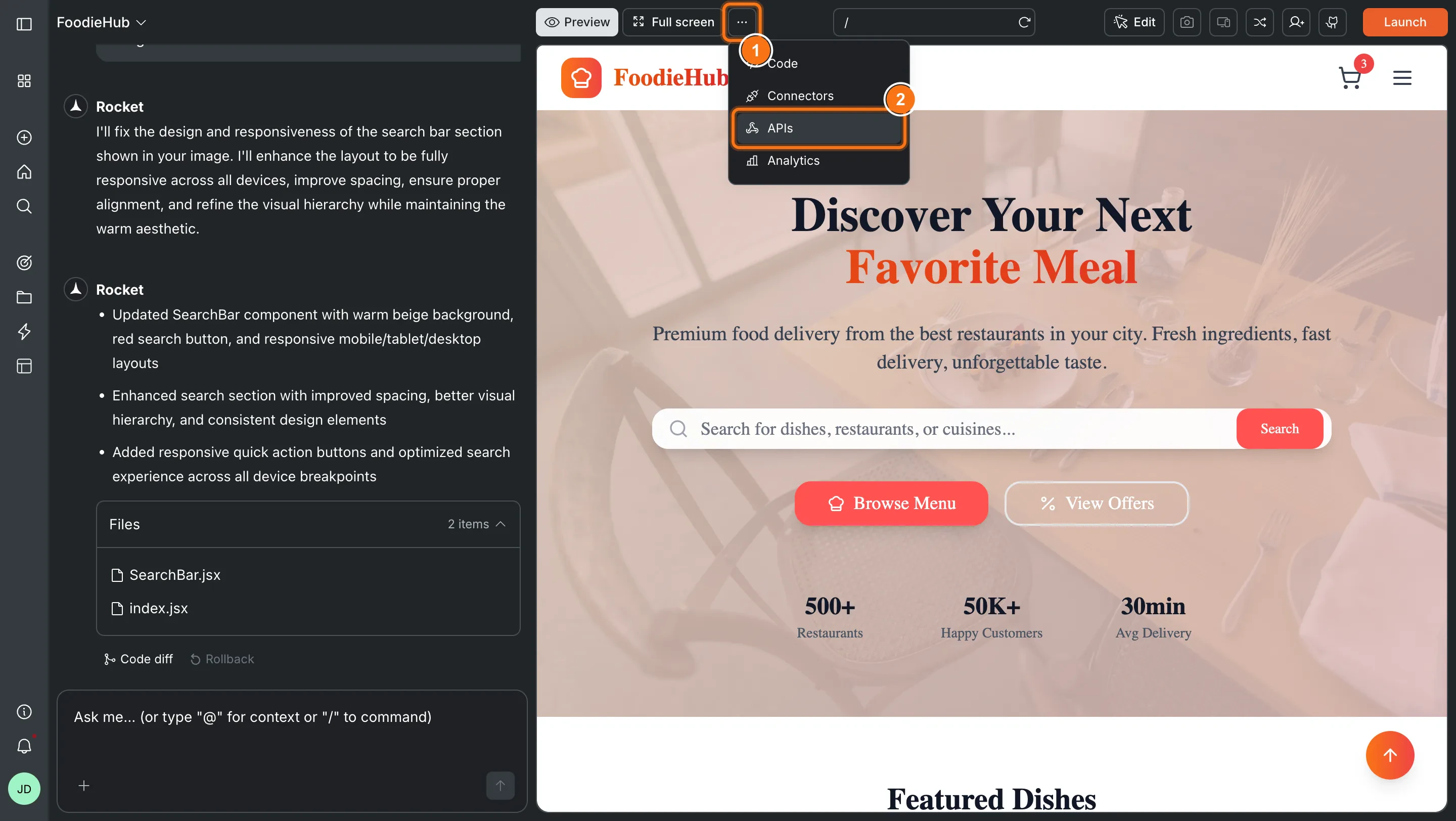
In the APIs panel, open the Select an API dropdown and click Add APIs to open the import dialog. Pick one of four import methods.
Postman key (workspace import)
Use this when your APIs already live in a Postman workspace.Get your Postman API key:
Visit Postman’s documentation to learn how to generate your API key.
Click your avatar in the Postman header, then click Settings.
Go to API keys and click Generate API Key.
Enter a name and copy the key.
Your Postman API key provides access to any Postman data you have permissions for. Keep it private and rotate it if you believe it has been exposed.
Import into Rocket:
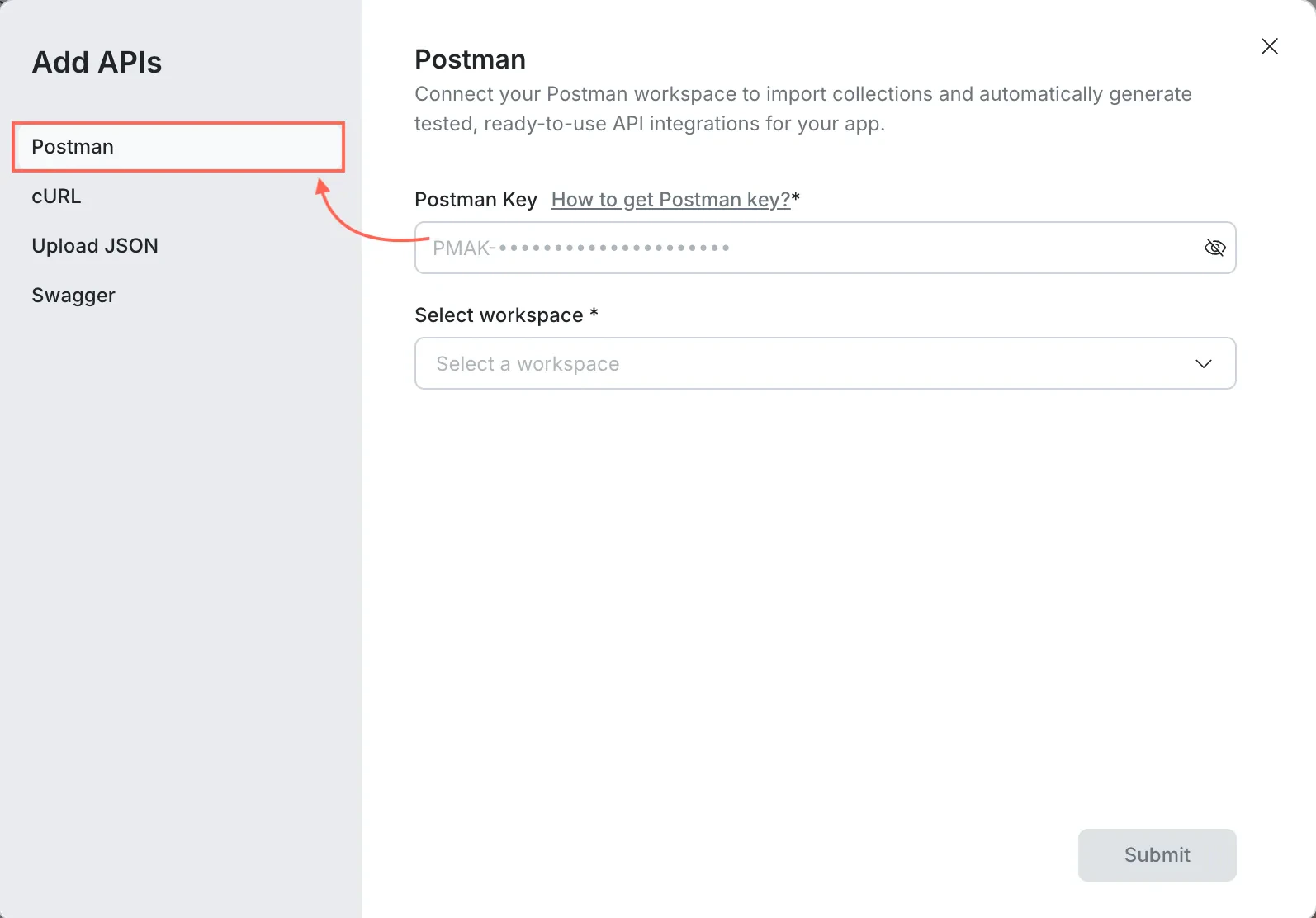
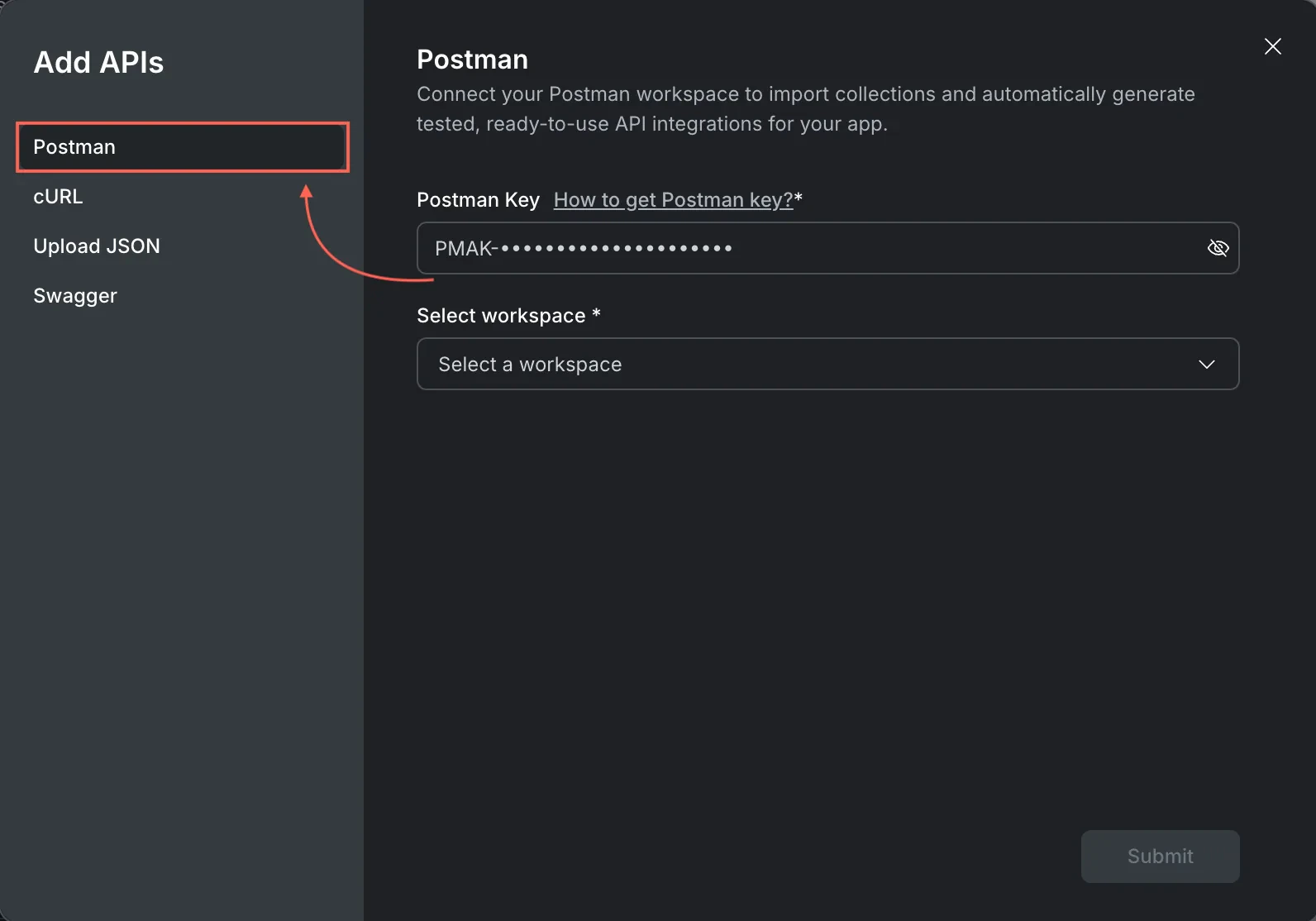
In Add APIs, select the Postman tab.
Paste your Postman Key.
Select the workspace.
Click Submit, then select the collections or folders you want to add.
Click Add APIs.
Postman key and workspace selection
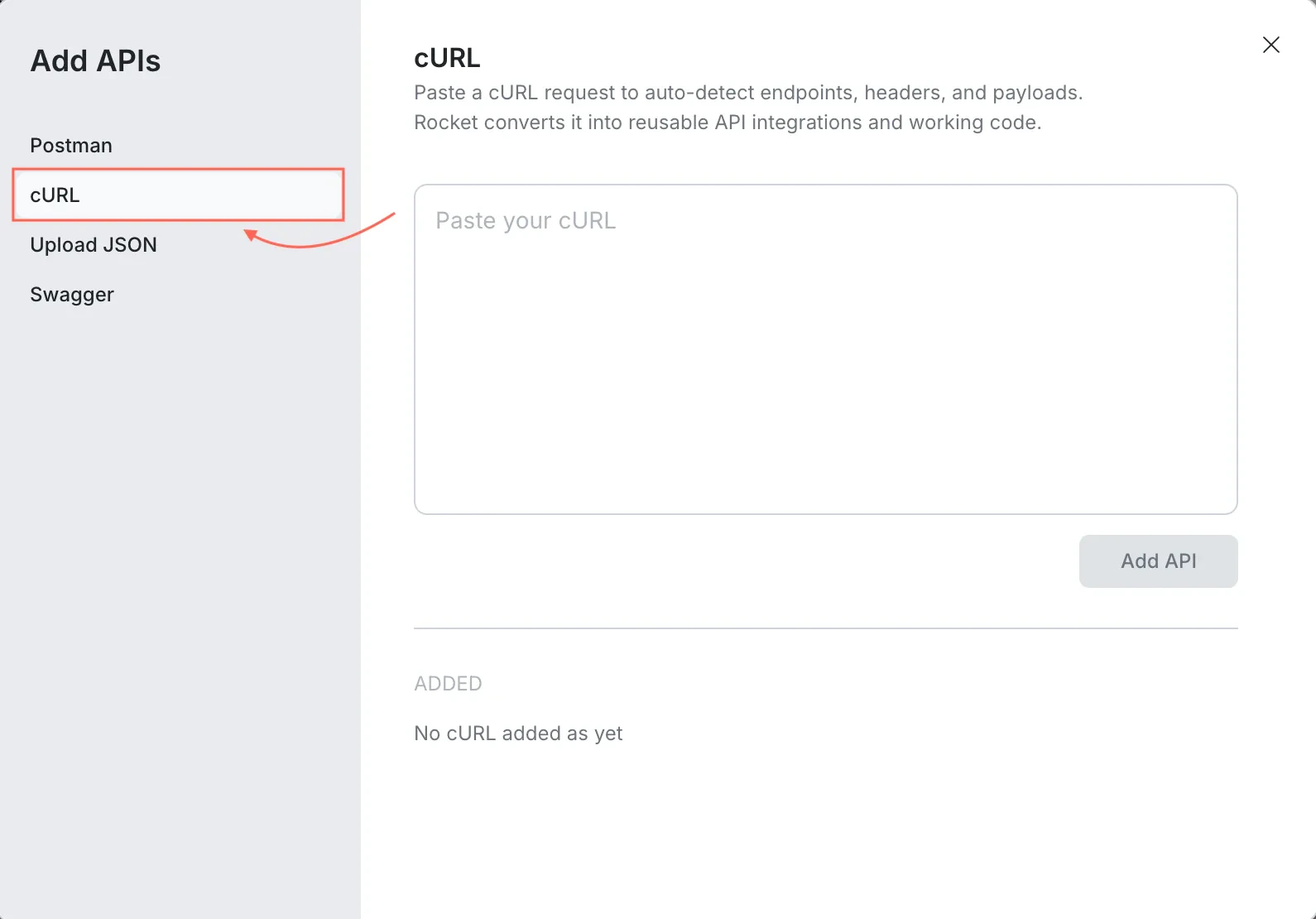
cURL (single request import)
Use this when you have a working request you can paste.
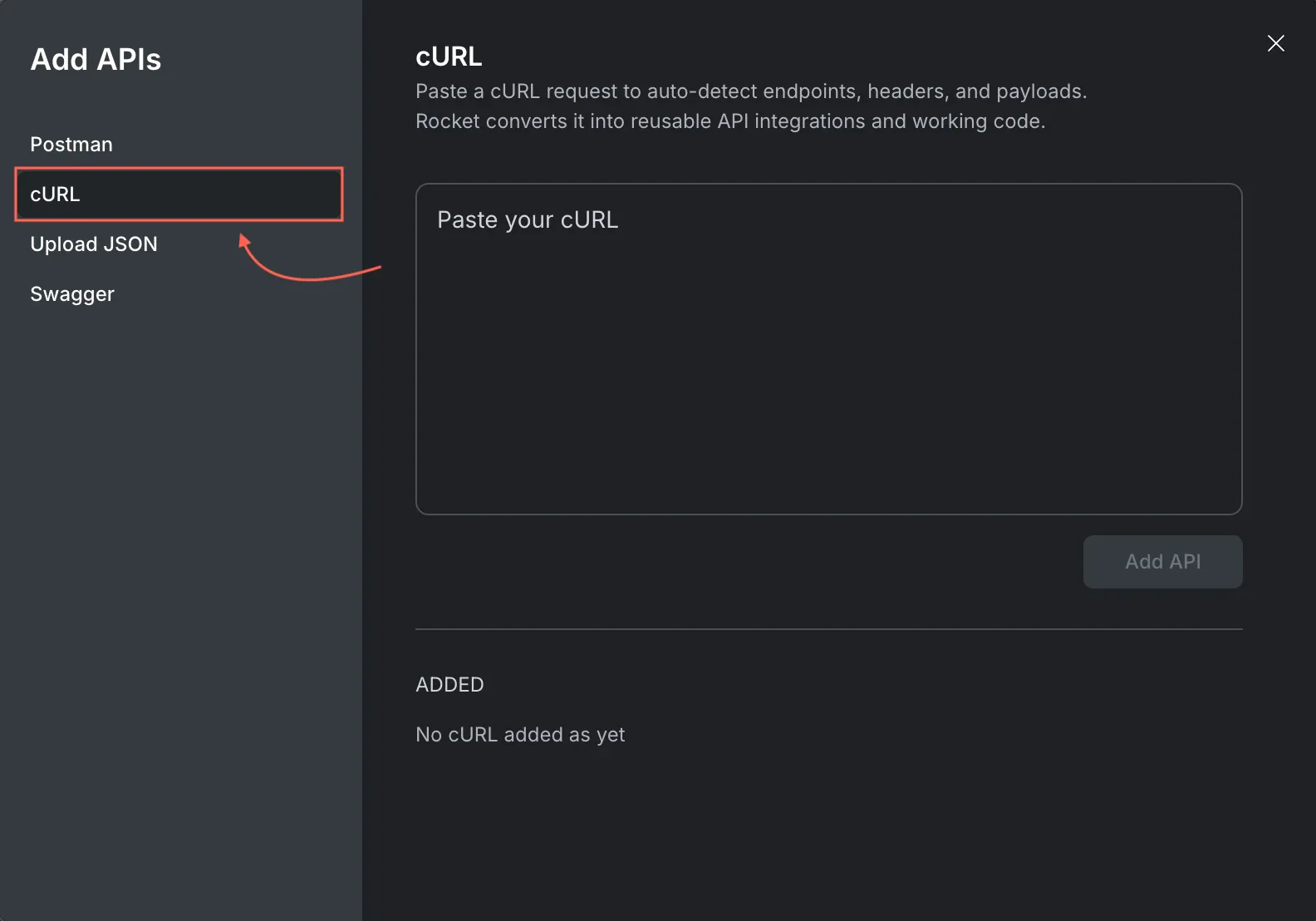
In Add APIs, select the cURL tab.
Paste the full cURL command.
Click Add API.
cURL import tab
Make sure the cURL includes the correct URL, headers, and auth format. If it uses environment variables, map them to your project’s variable format after import.
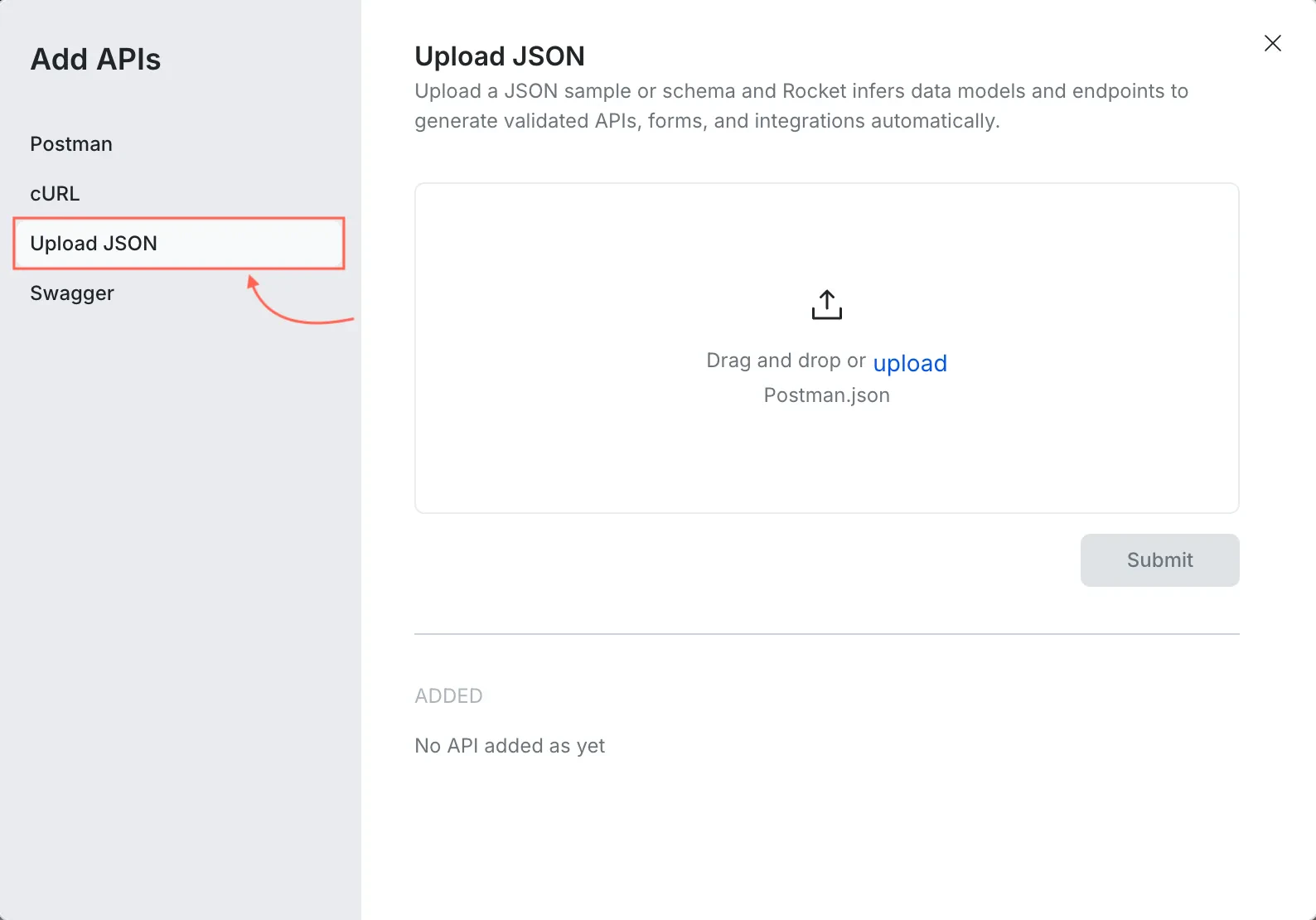
Upload JSON (Postman export file)
Use this when you have a Postman export file.
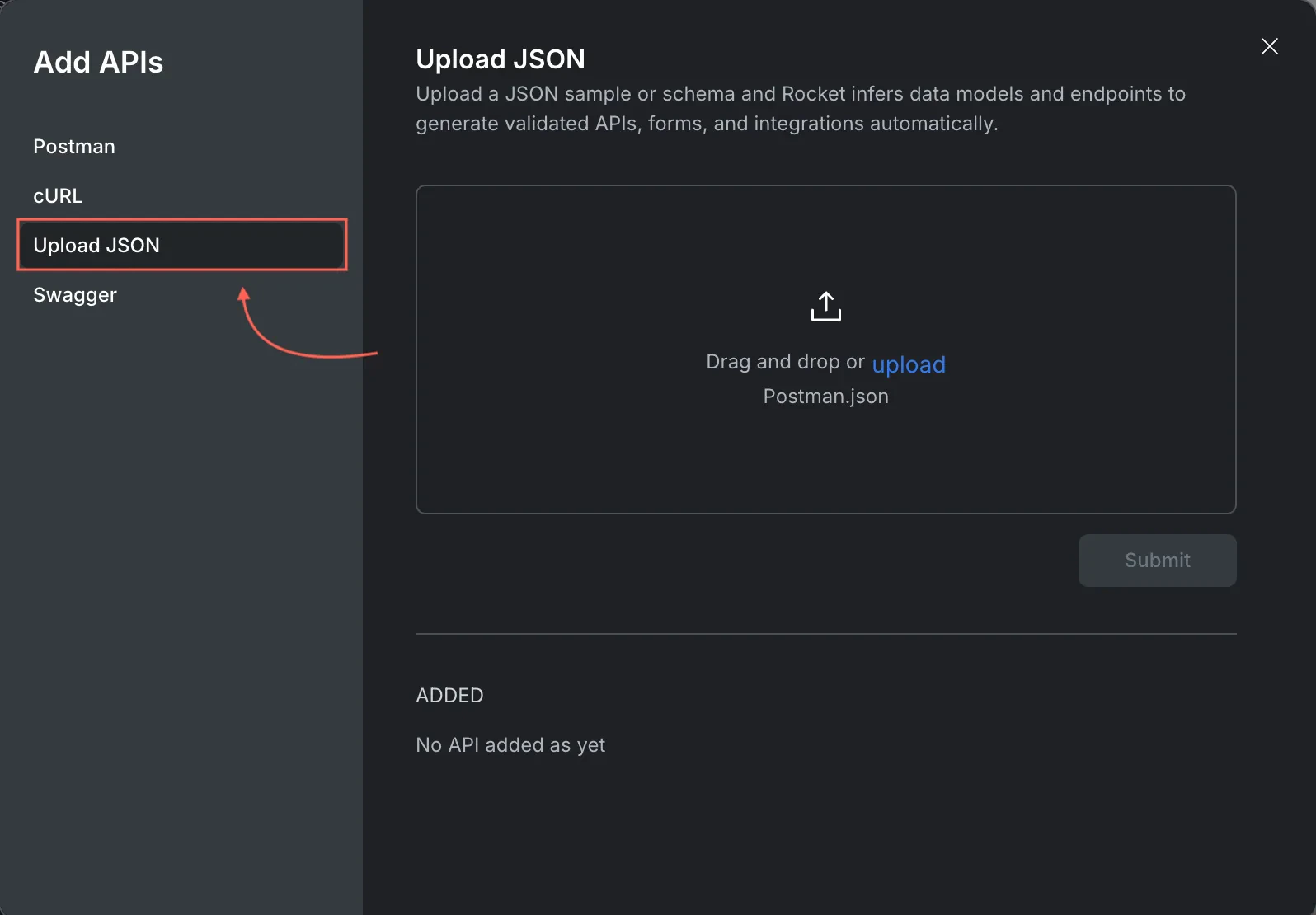
In Add APIs, select Upload JSON.
Drag and drop or upload your postman.json.
Click Submit.
Upload JSON tab
Swagger (OpenAPI import)
Use this when your backend provides an OpenAPI spec.
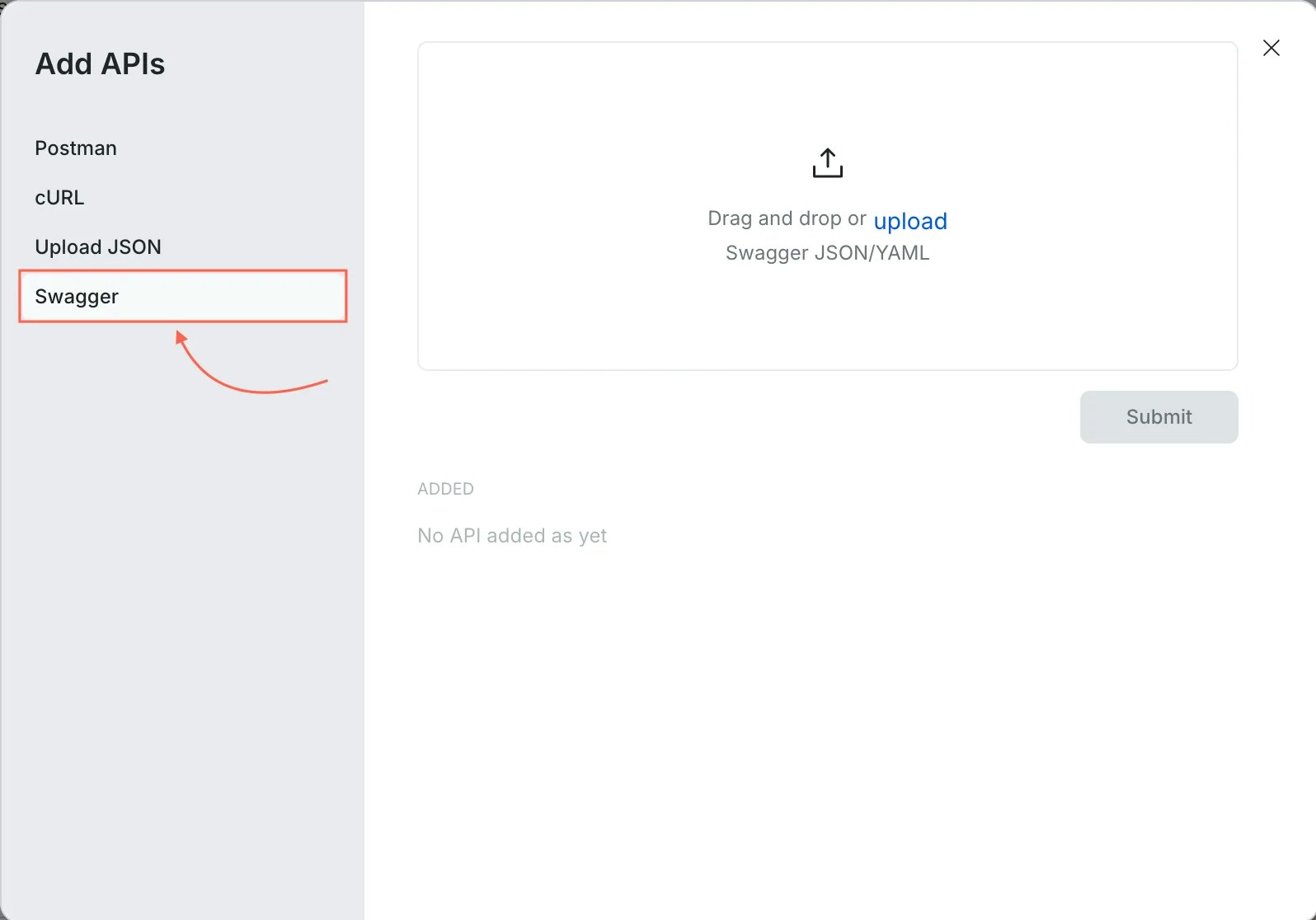
In Add APIs, select Swagger.
Drag and drop or upload your Swagger JSON or YAML file.
Click Submit.
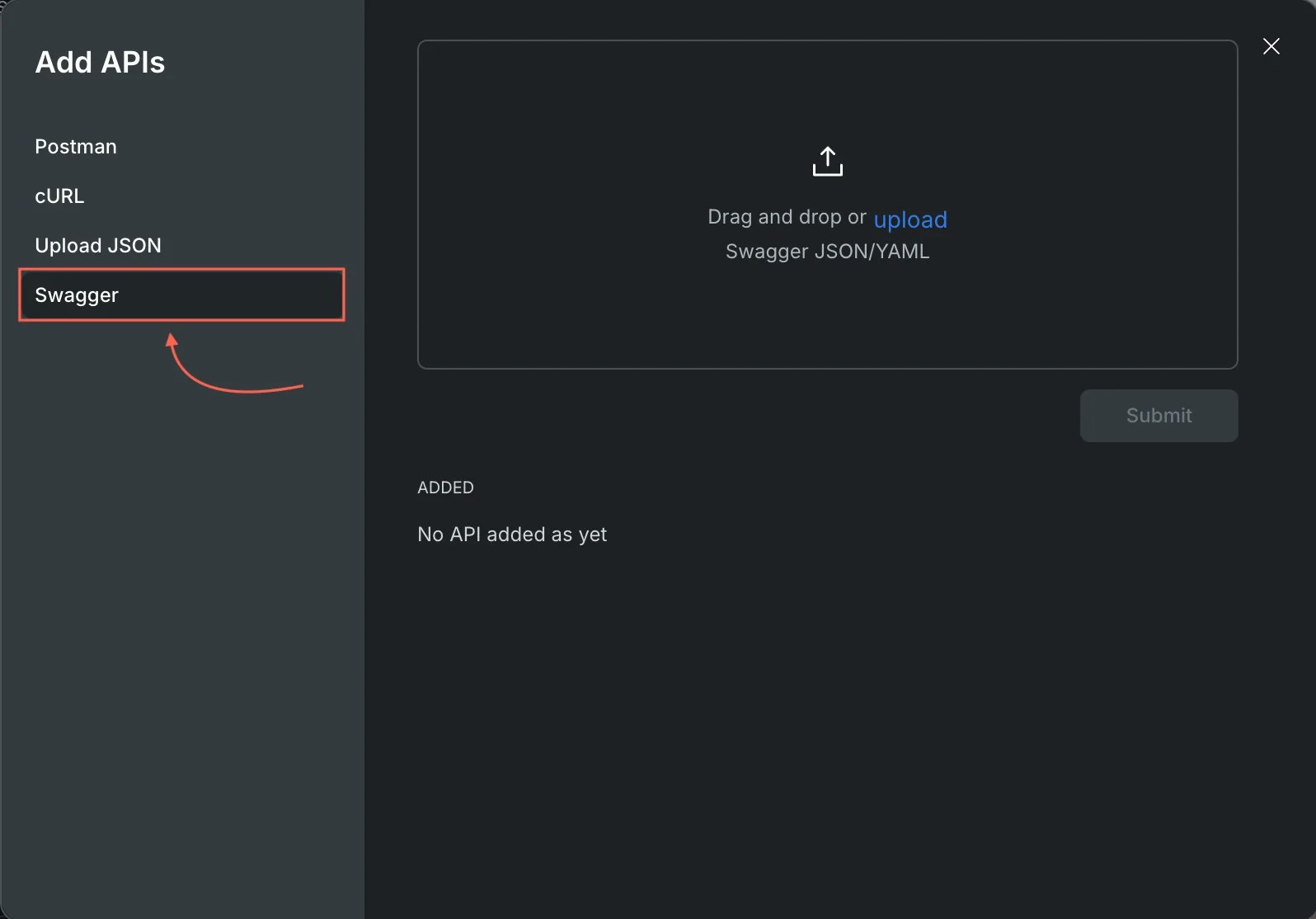
Swagger upload tab
If your spec defines multiple servers, confirm the base URL matches your environment.
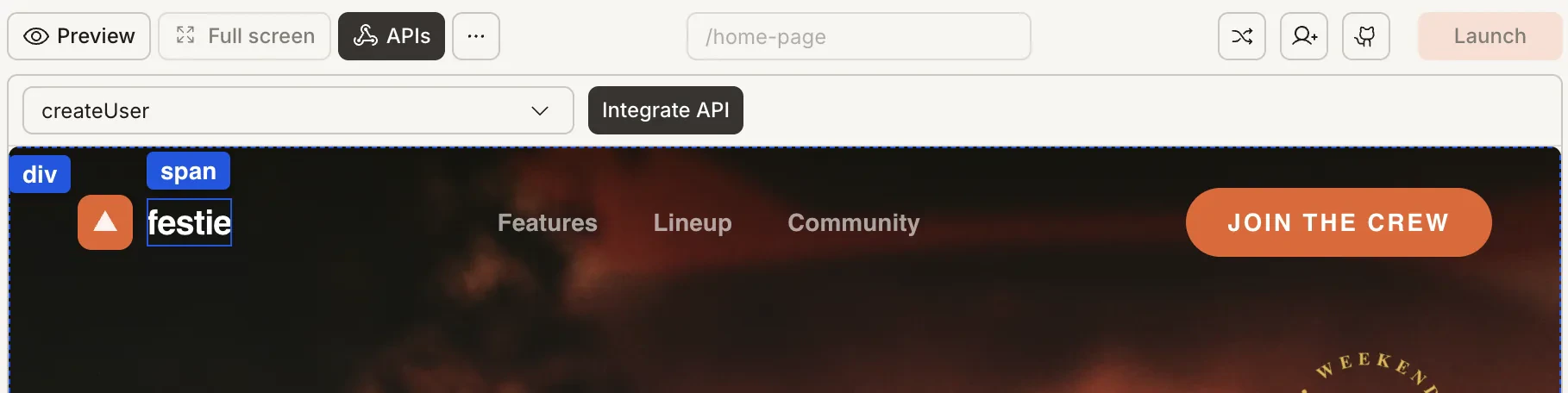
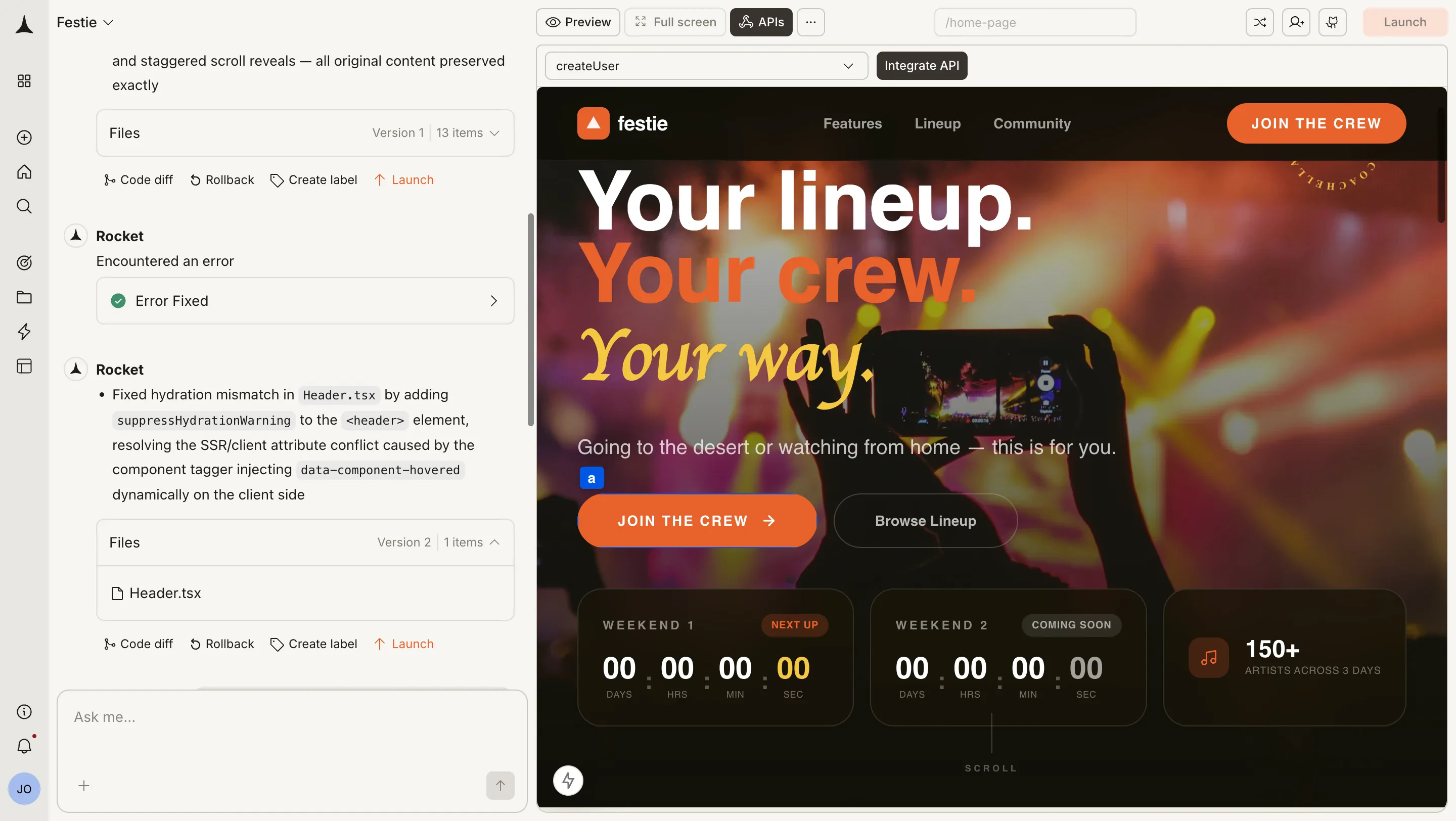
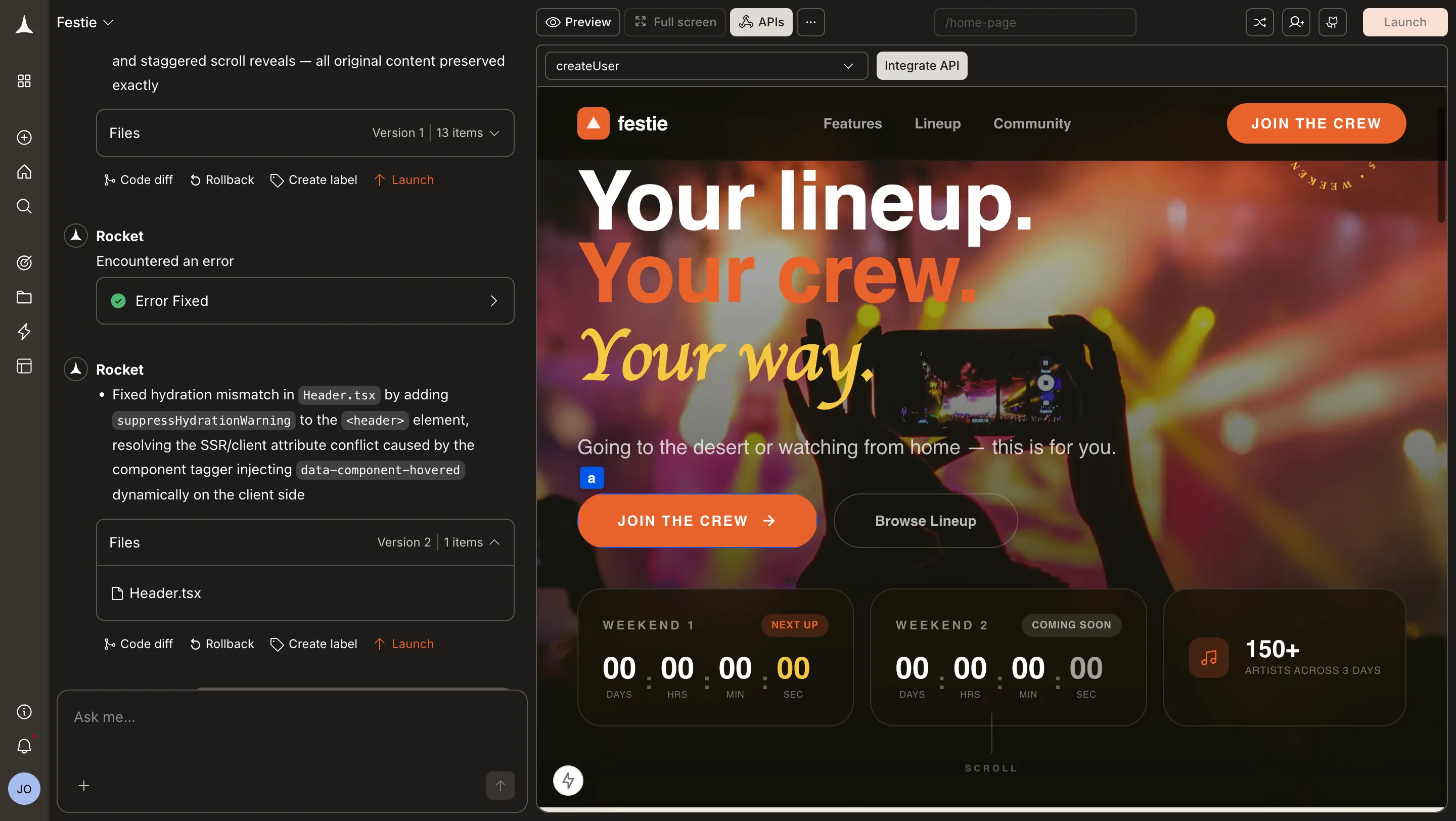
In the APIs panel, choose the route (the screen or page path, for example /dashboard or /settings) where the API should run, and select the API from the Select an API dropdown. Then click Integrate API.
Route picker, API dropdown, and Integrate API button
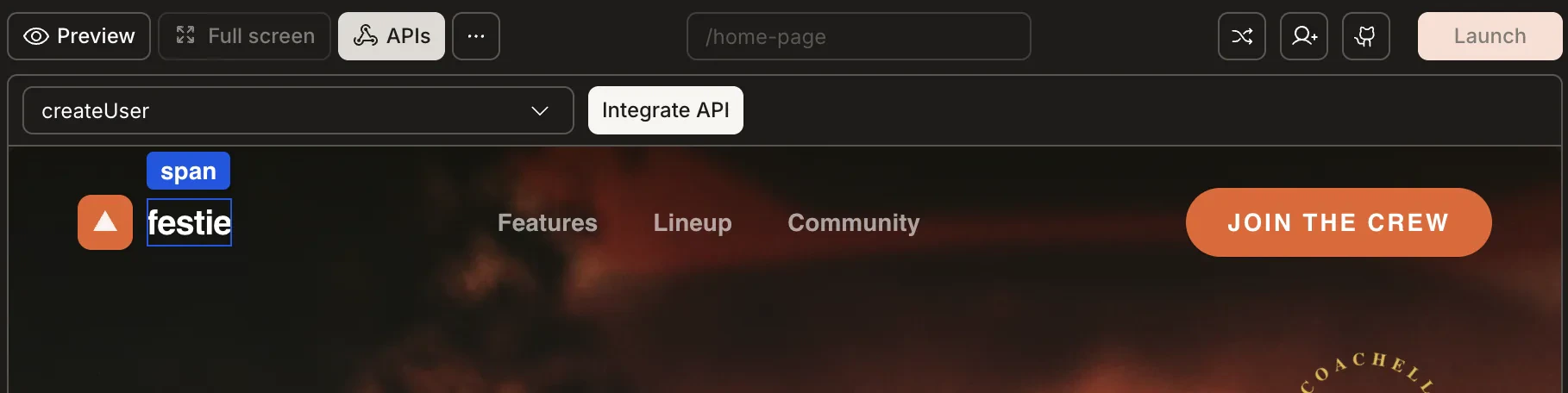
After clicking Integrate API, element selection activates. A tag bar appears at the top of the preview showing the available elements. Click the UI element where you want to attach the API.
Element selection bar in API integration mode
Clicking an element in the preview to attach the API
Attach to a stable container element that is always present on the screen. Avoid conditional elements that may not exist on initial render.
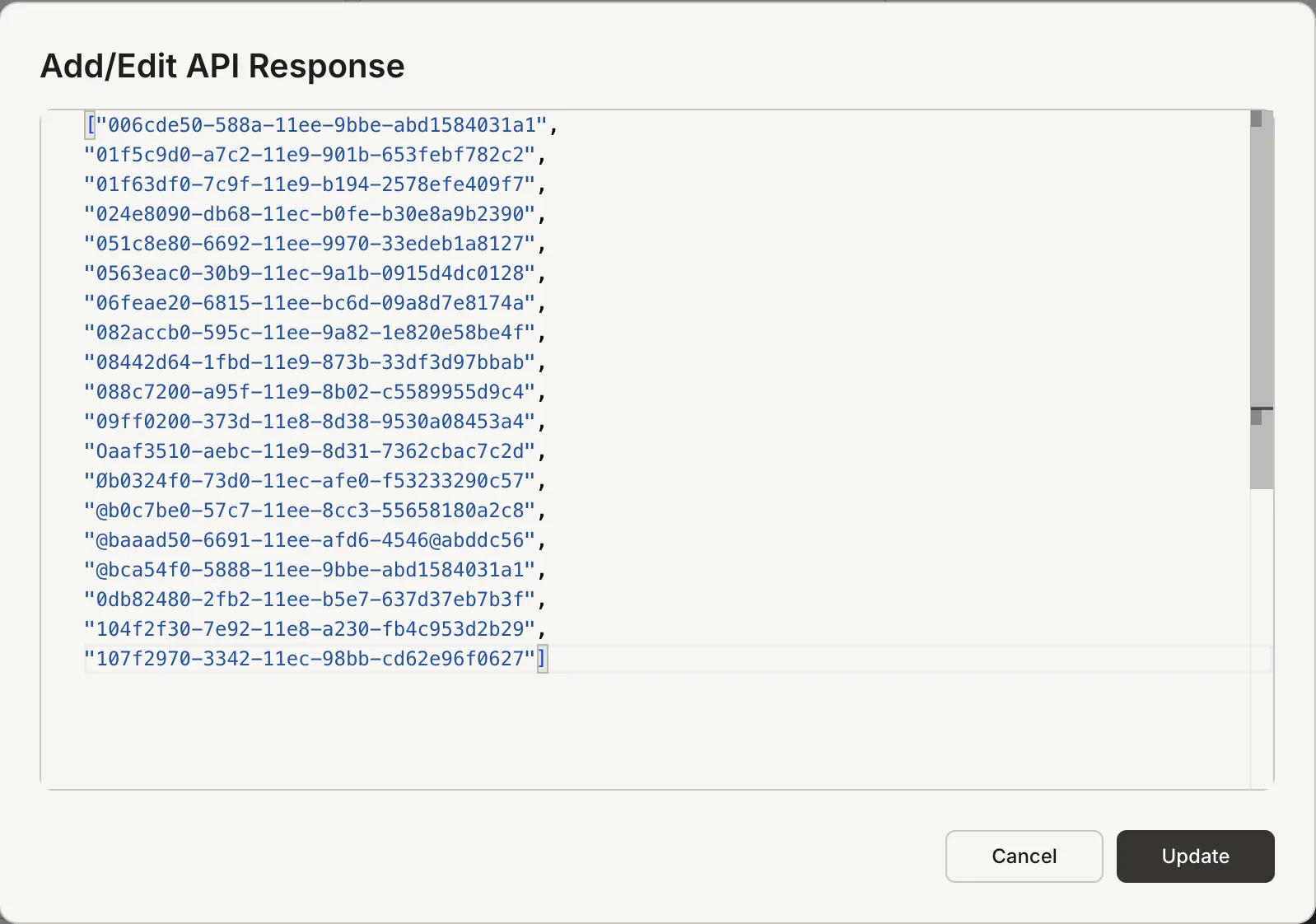
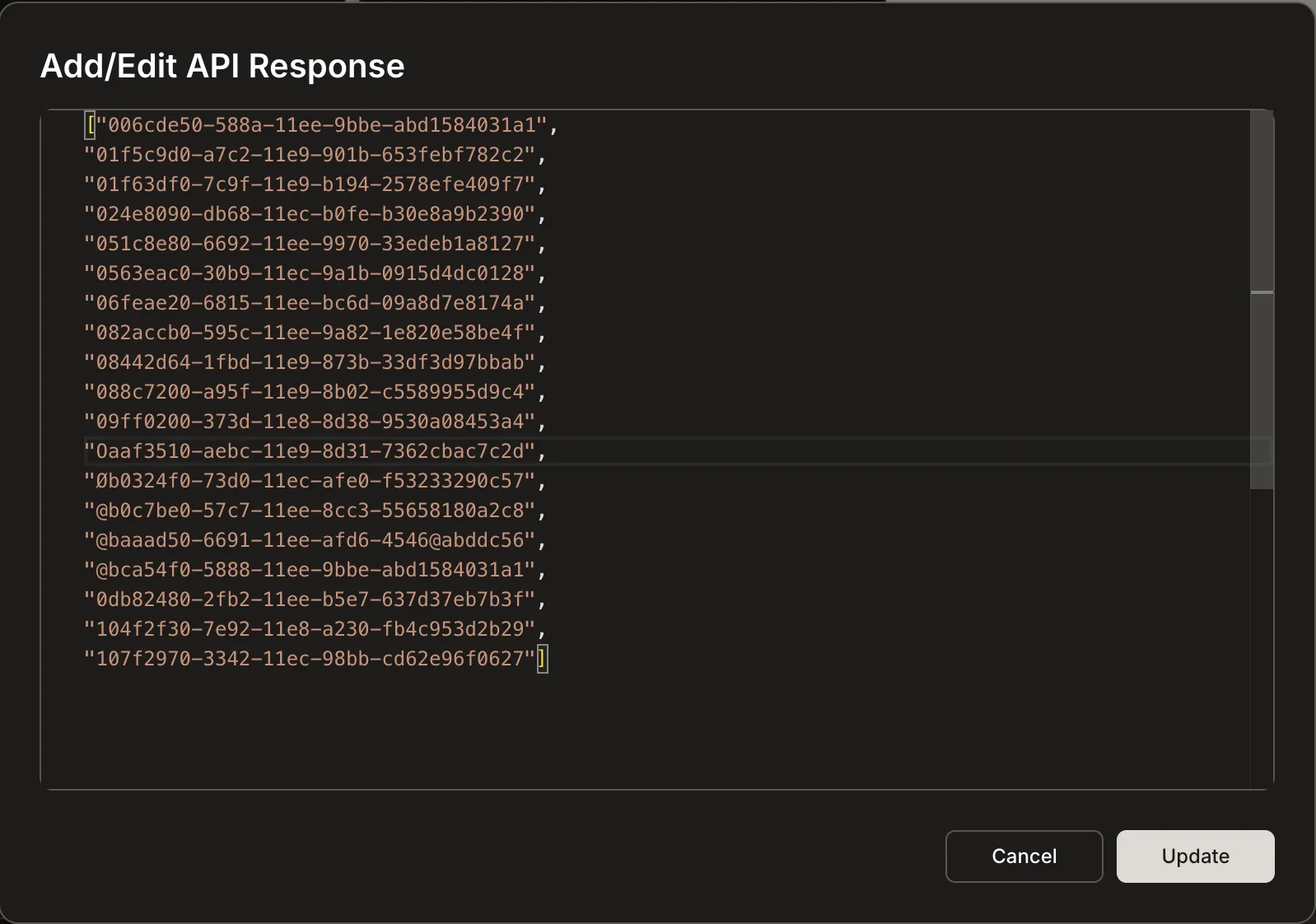
To update a mock or expected response for an API, open the Add/Edit API Response dialog for that endpoint and paste the updated JSON, then click Update.
Import did not complete, or you imported into a different project. Reopen Add APIs and verify your source: check that your Postman API key is valid, that your Postman workspace contains collections, and that you are importing into the correct project.
Integration asks for attributes you did not expect
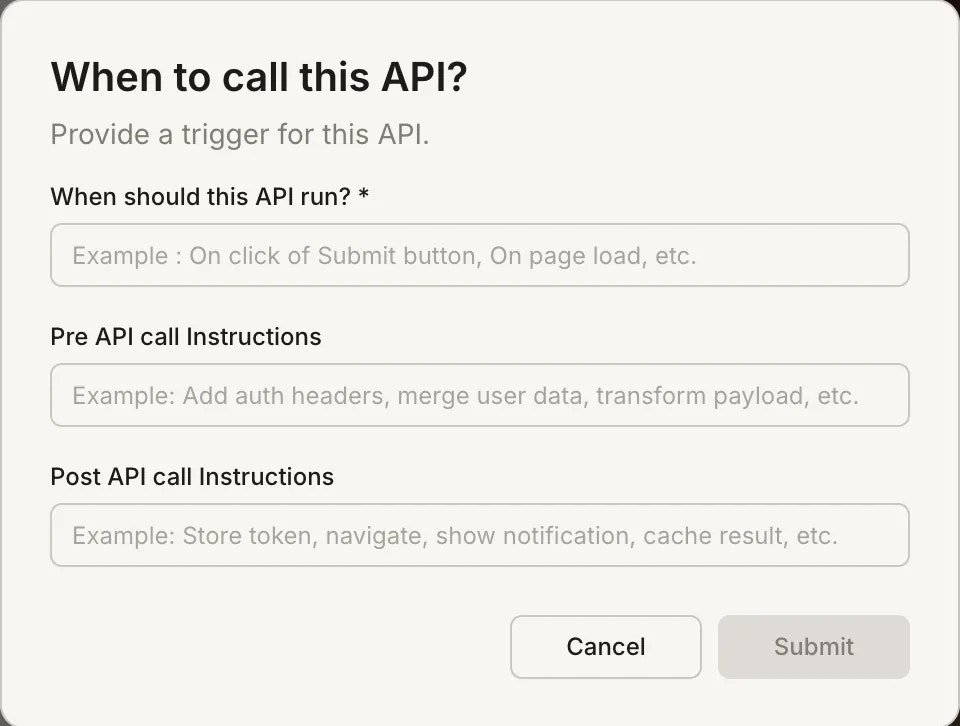
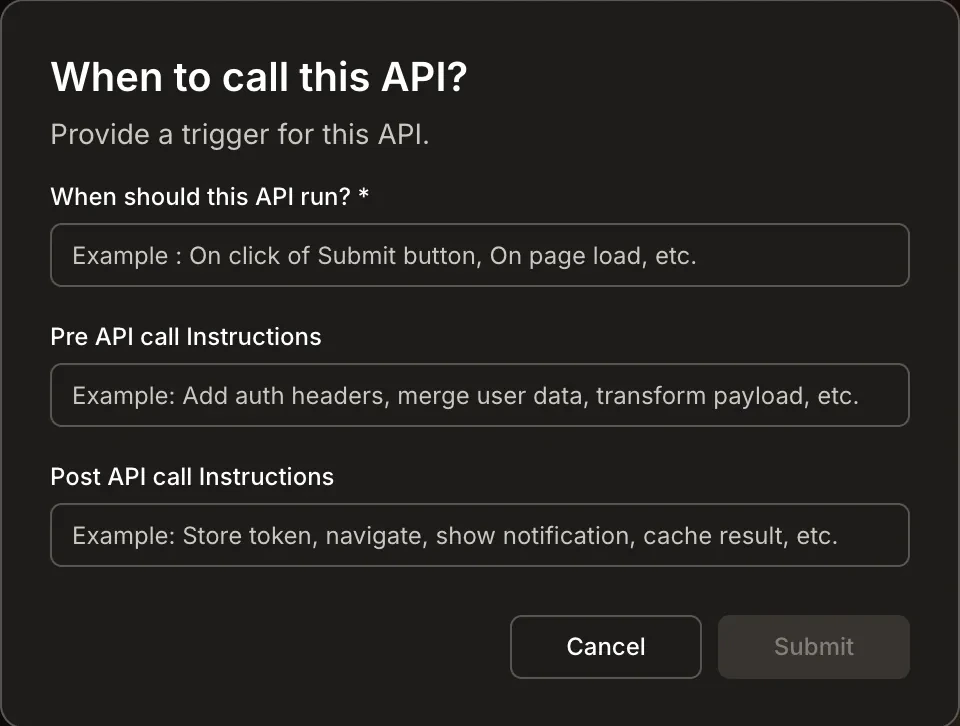
The imported definition includes placeholders. Map them to known state variables or environment variables. Set any placeholder like accessToken to reference your stored token value and confirm the request uses the correct auth scheme (e.g. Authorization: Bearer <token>).
Calls run but the UI does not update
Response data is likely not stored to the variable your UI is bound to. Update the Post API call instructions to store the response, then bind your UI list or widget to that variable.
You get 401 Unauthorized
Token is missing, expired, or not attached correctly. Fix in Pre API call instructions and ensure auth header formatting is correct (e.g. Bearer <token>).