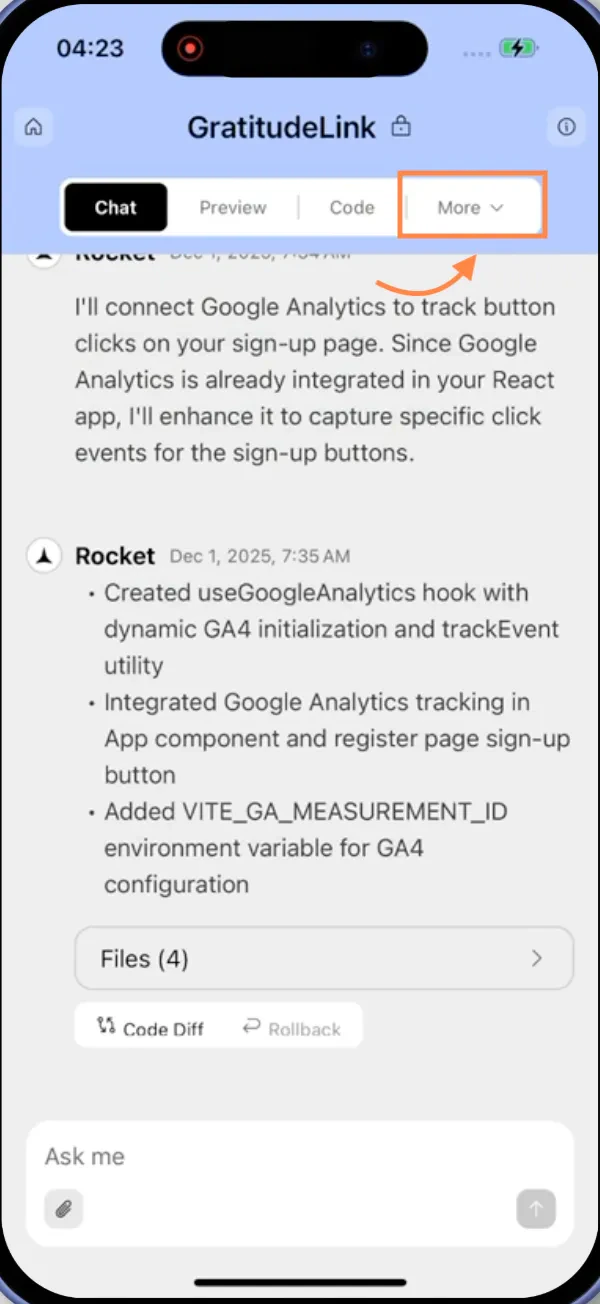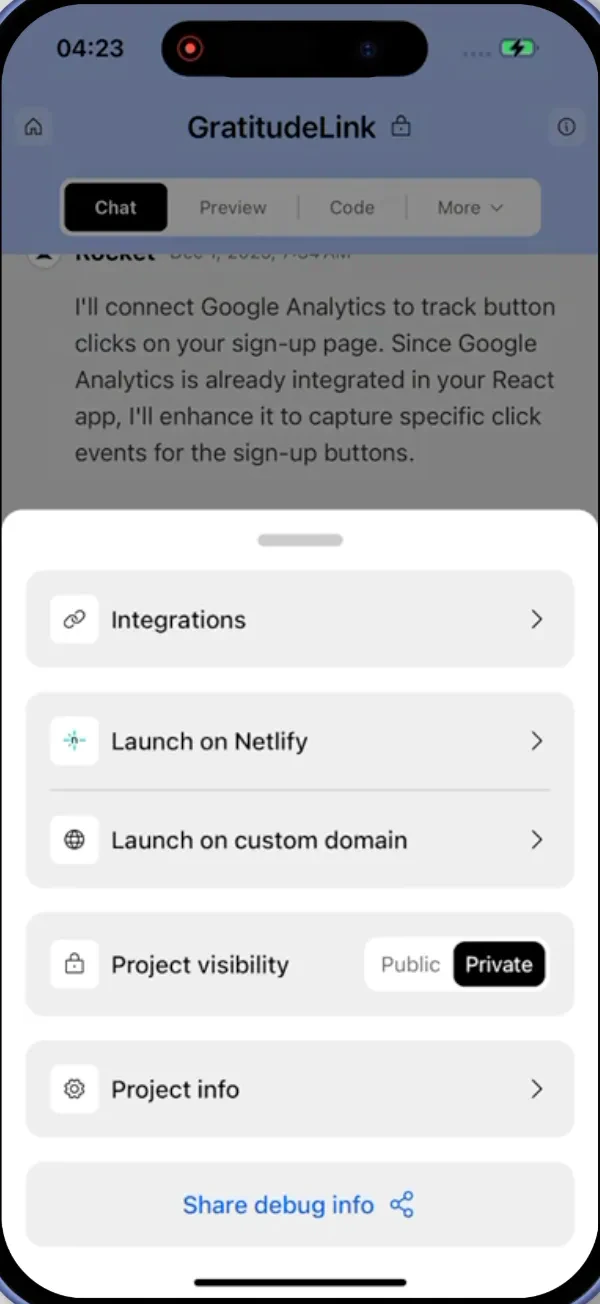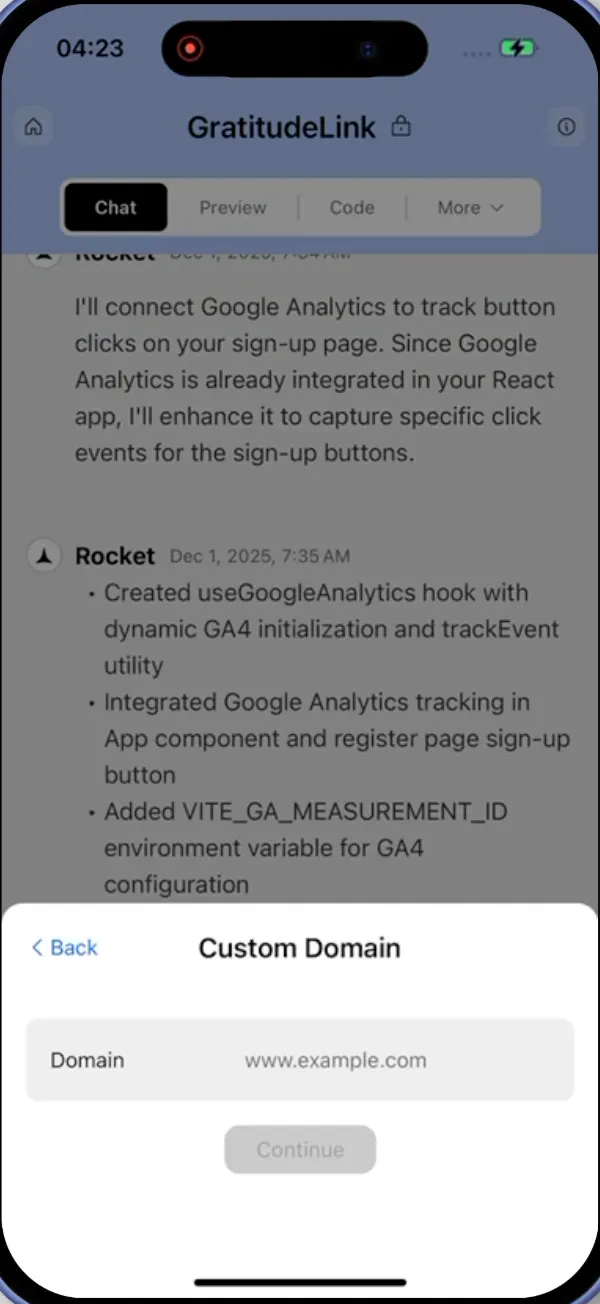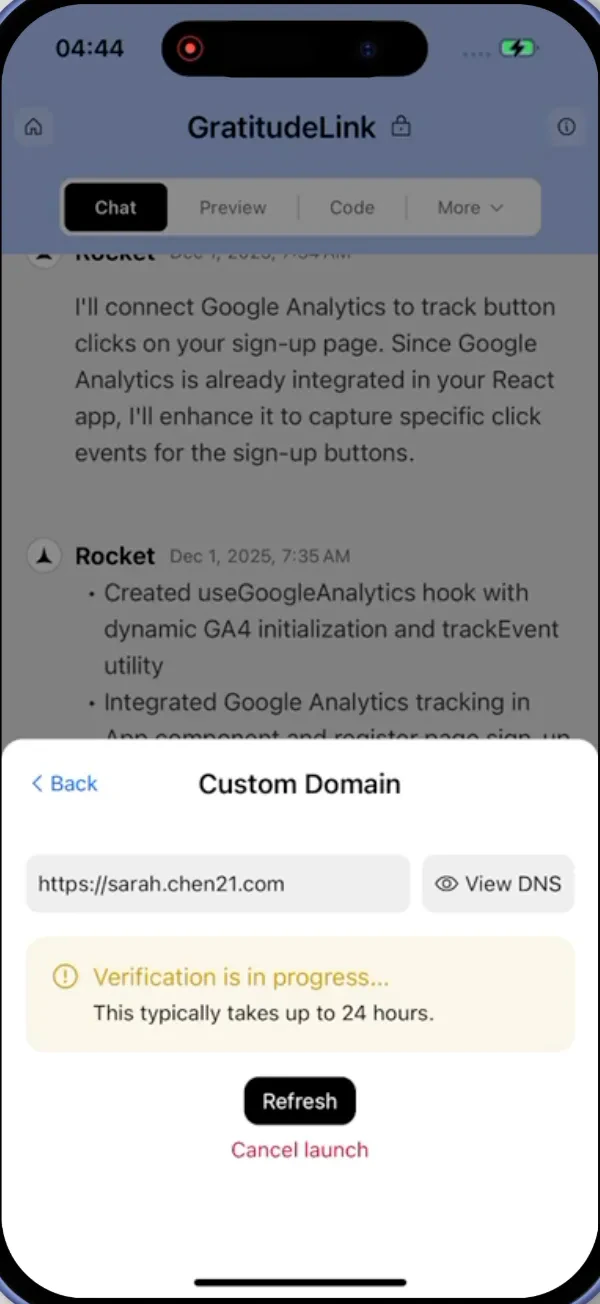

Connect any domain you own to your Rocket app so it is reachable at your custom address with automatic HTTPS. If you do not own a domain yet, you can buy one directly through Rocket.
You need a Rocket task that has been deployed to the web and access to your domain provider account.
Rocket tries to configure DNS automatically by default. For supported providers, it logs into your domain account with one-time permission and updates the records for you. If automatic setup is not available for your provider or fails, you can fall back to the manual method where Rocket gives you the exact records to add yourself.

Automatic setup (default)

Rocket uses an automated flow to log in to your domain provider and configure DNS automatically with your permission. This works for supported providers.
1

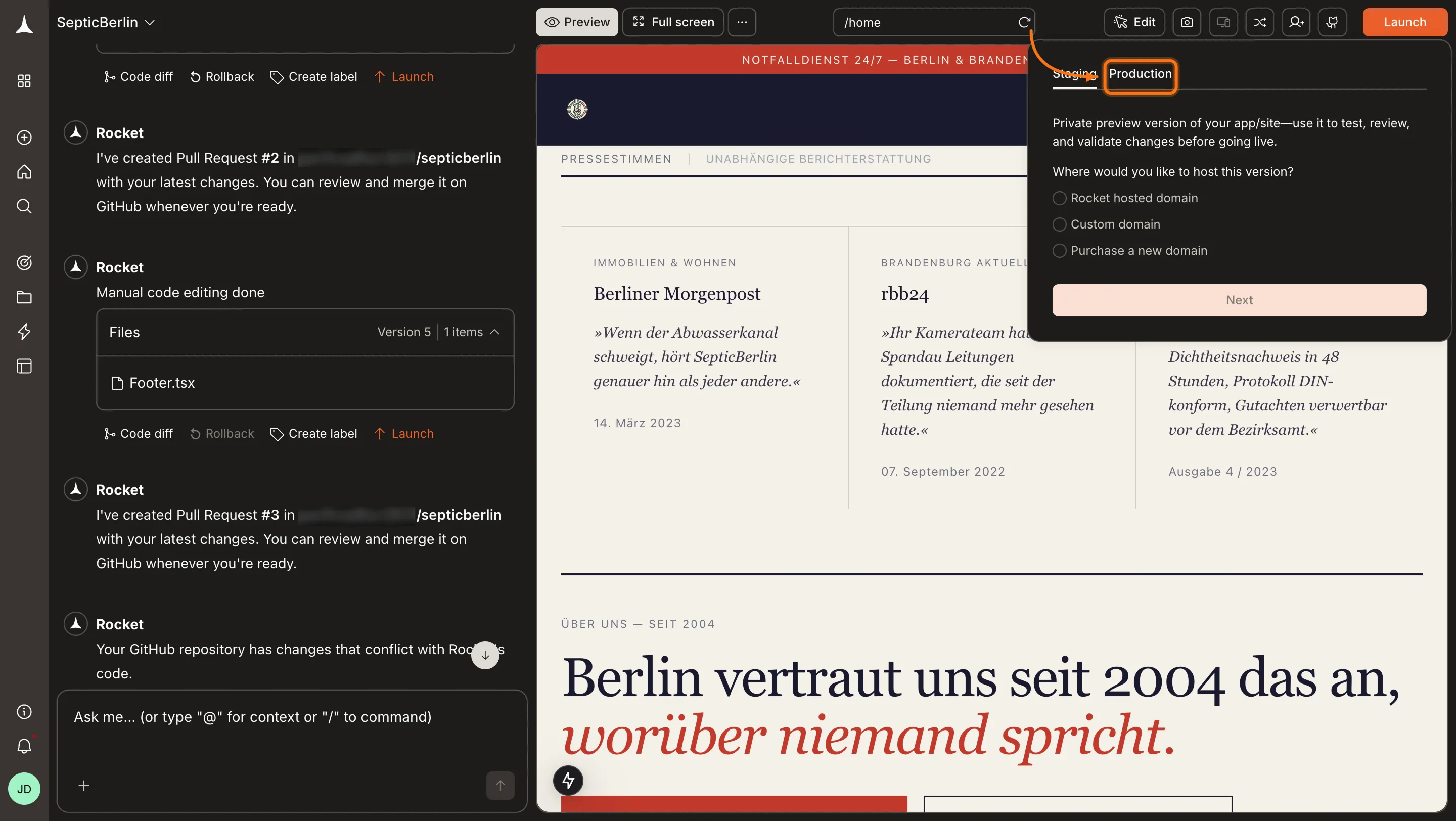
Open the Production tab in the Launch panel
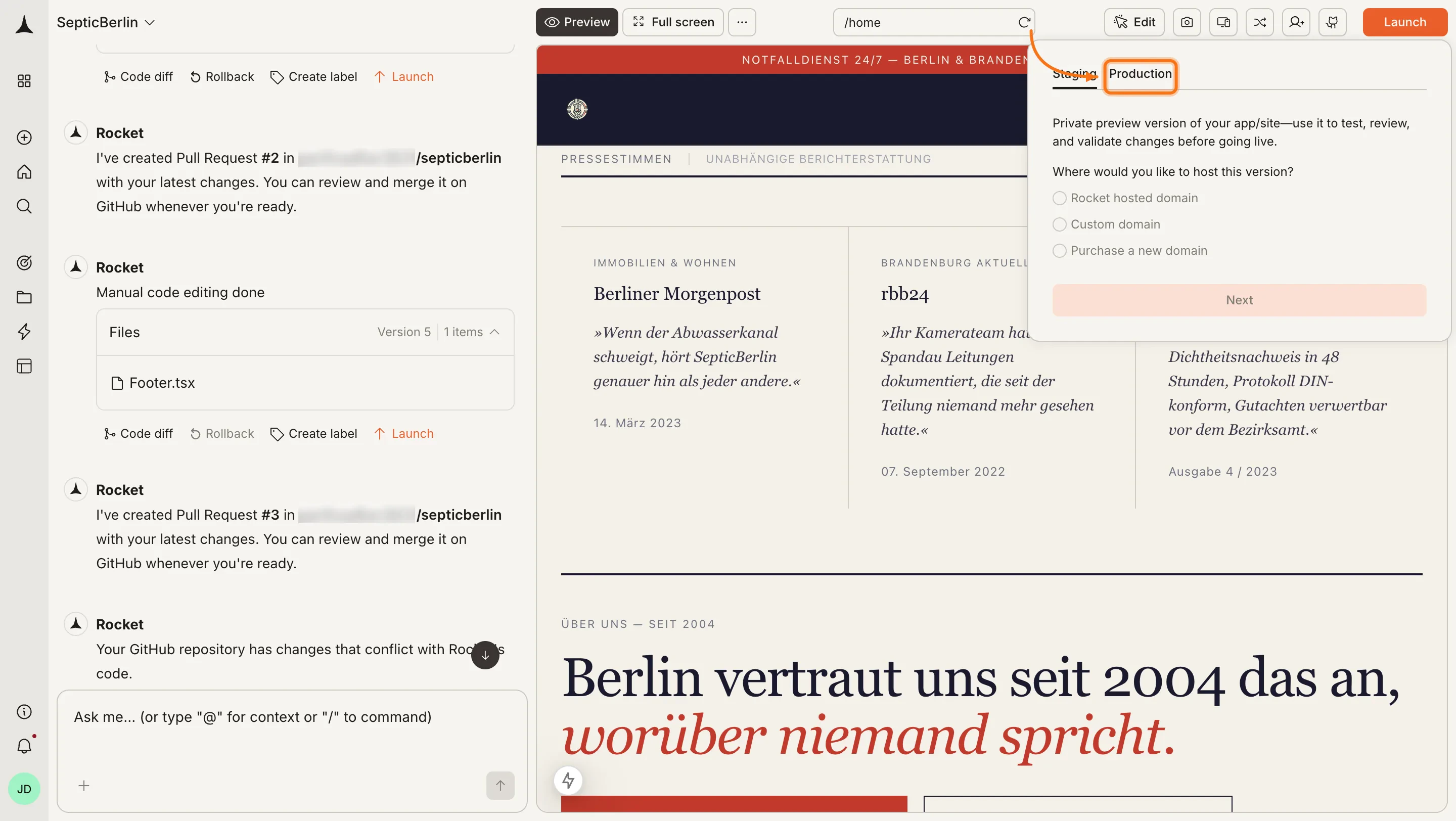
Click the Launch button in the top-right corner of your project, then click the Production tab.
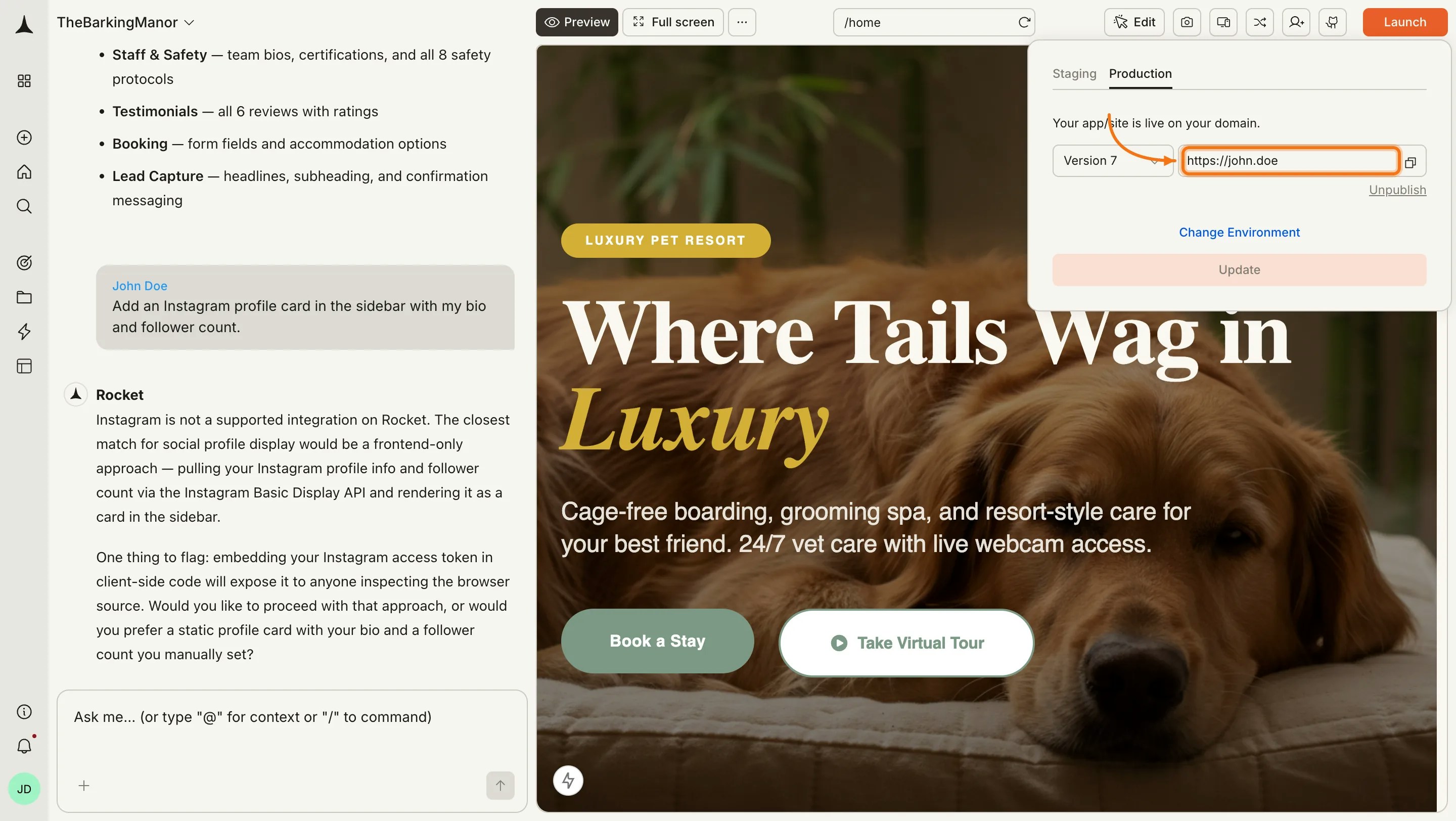
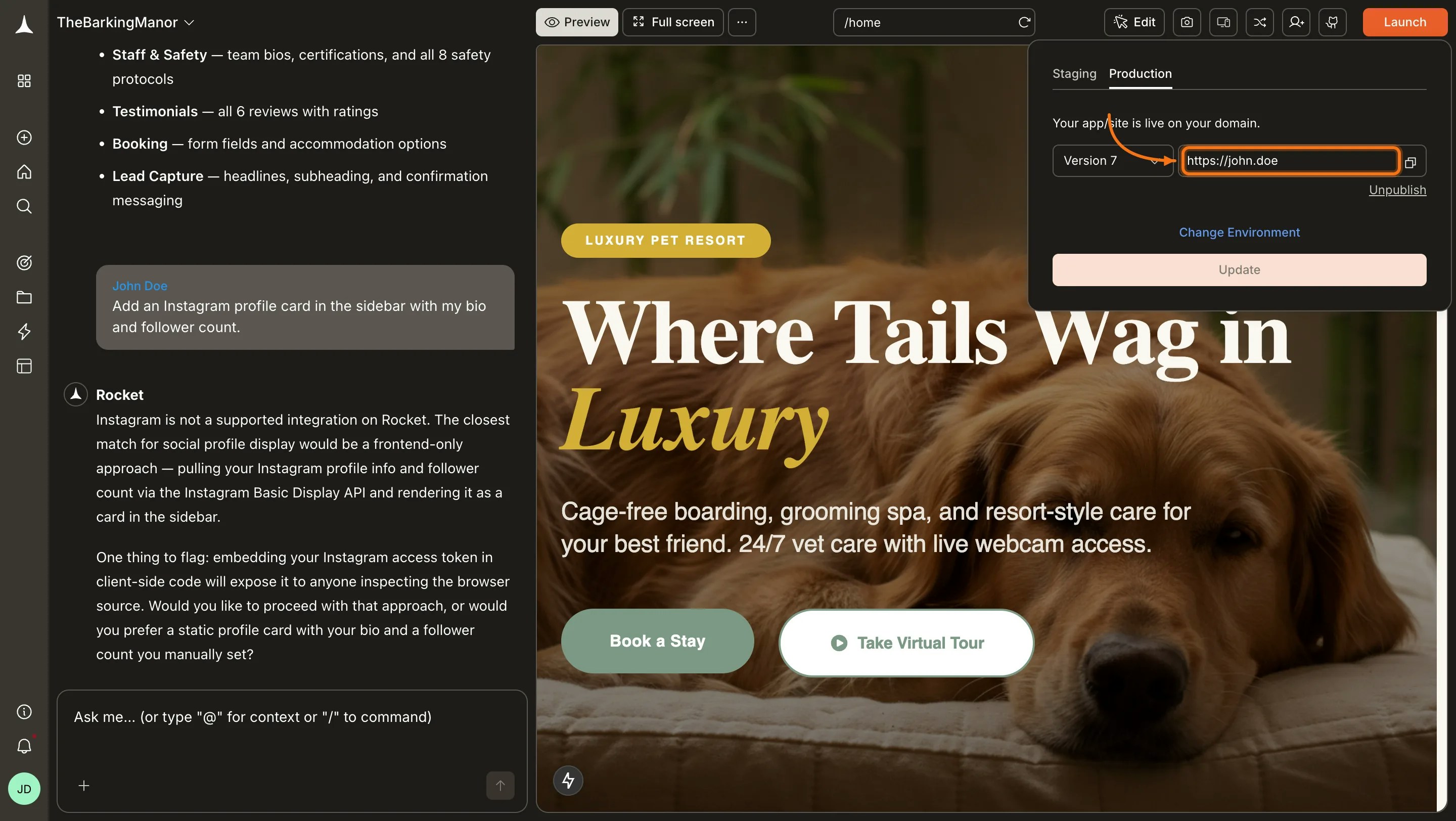
Launch panel with the Production tab selected.Launch panel with the Production tab selected.
2

Select a version and enter your domain

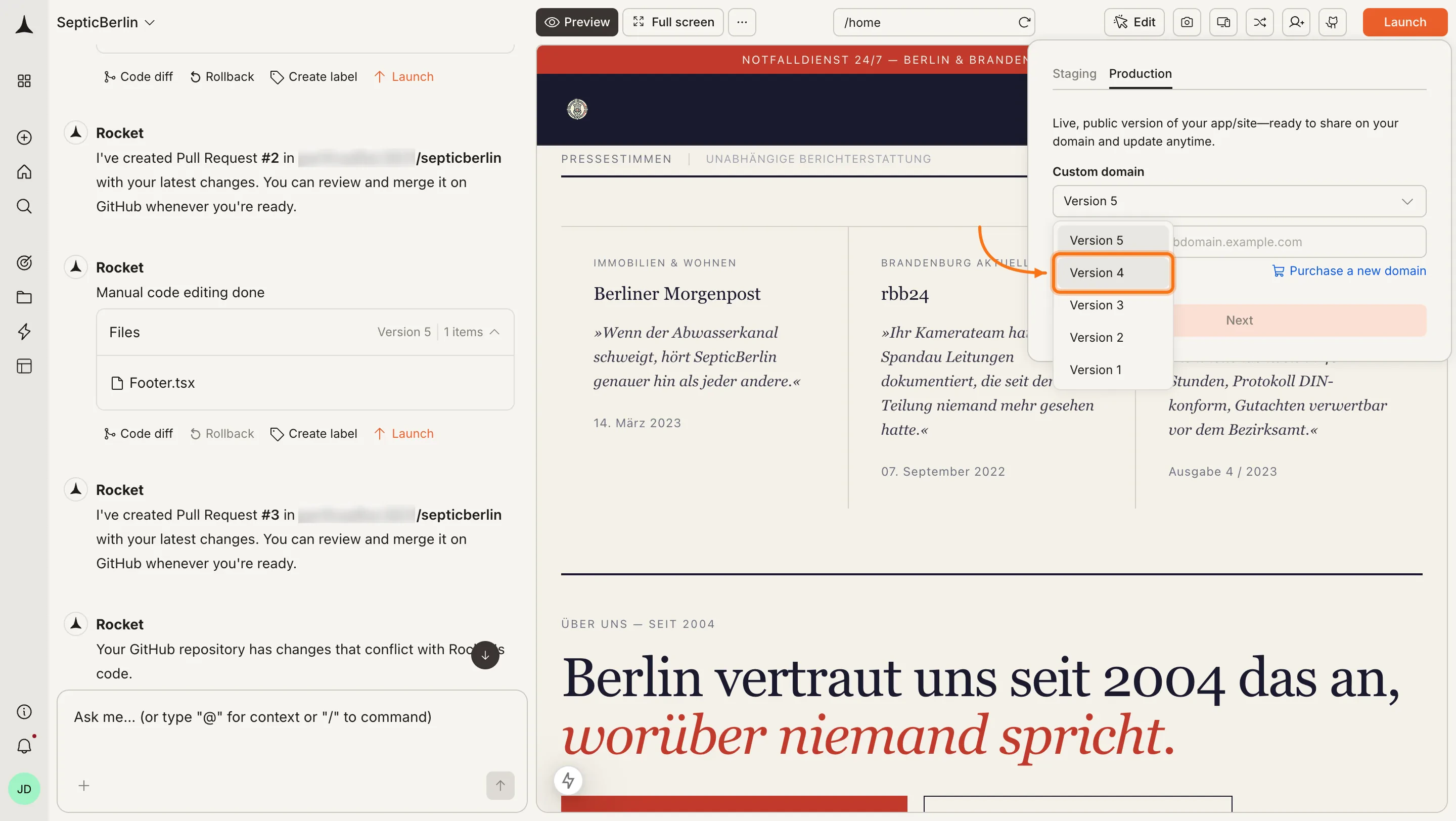
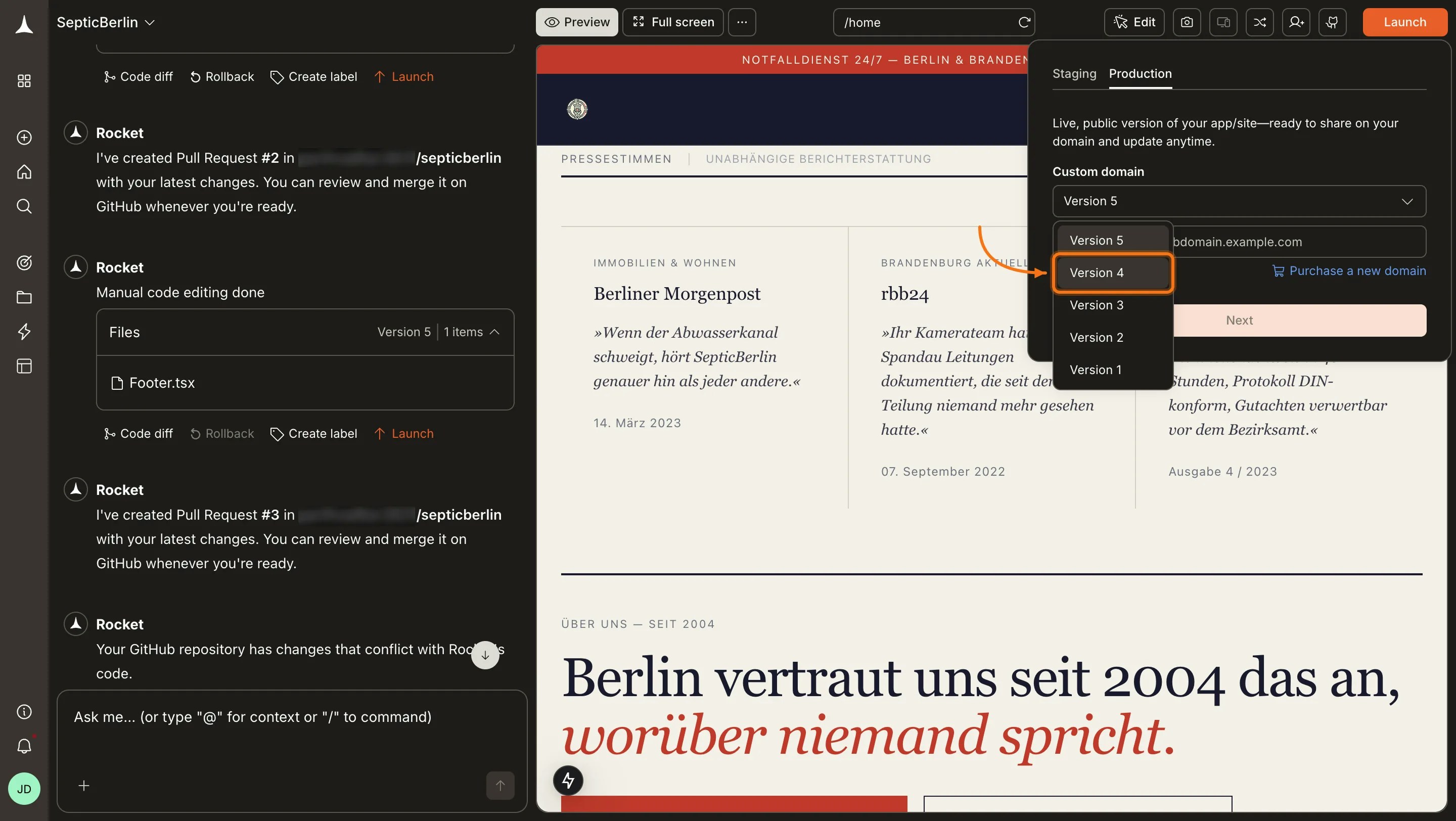
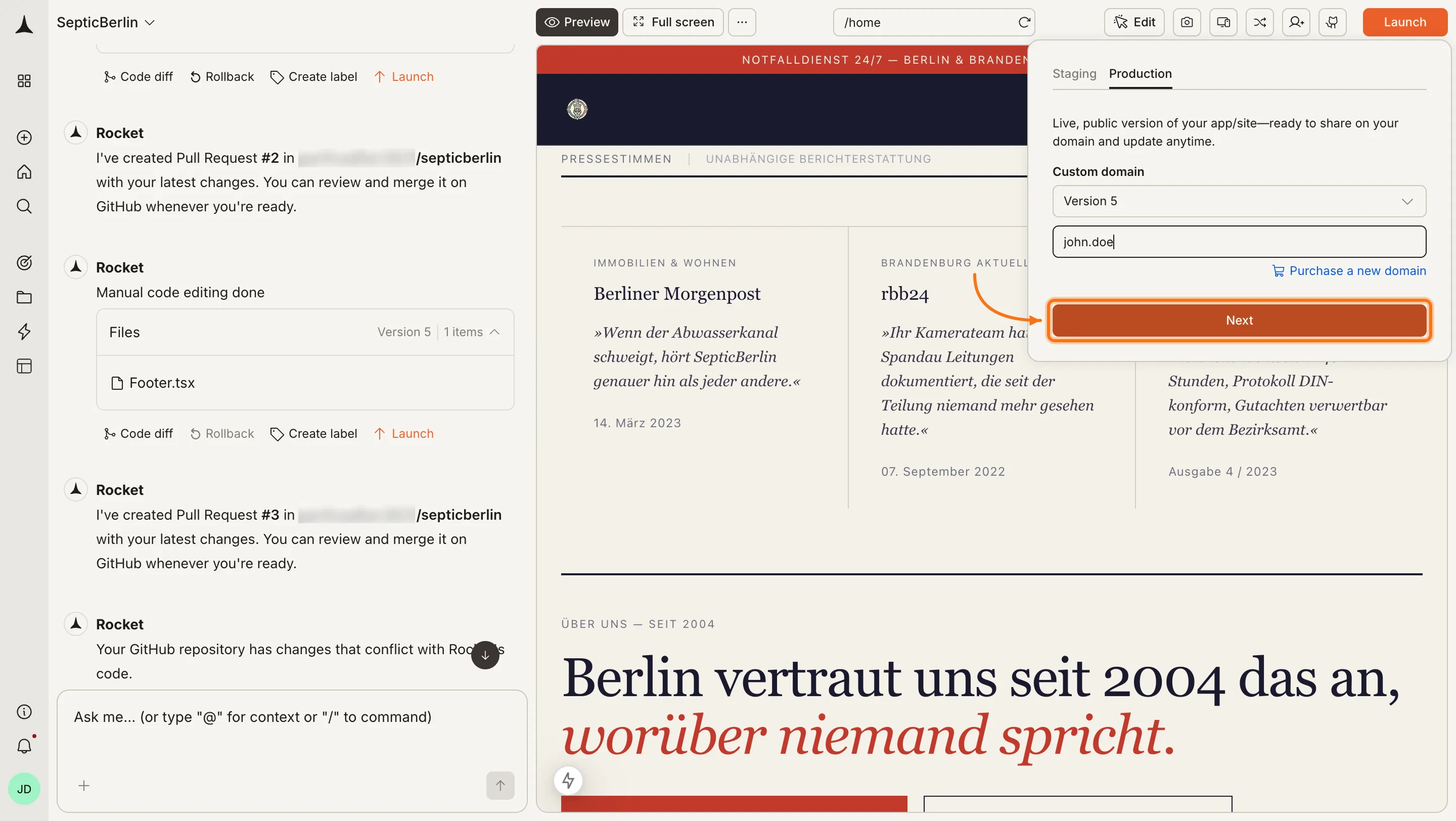
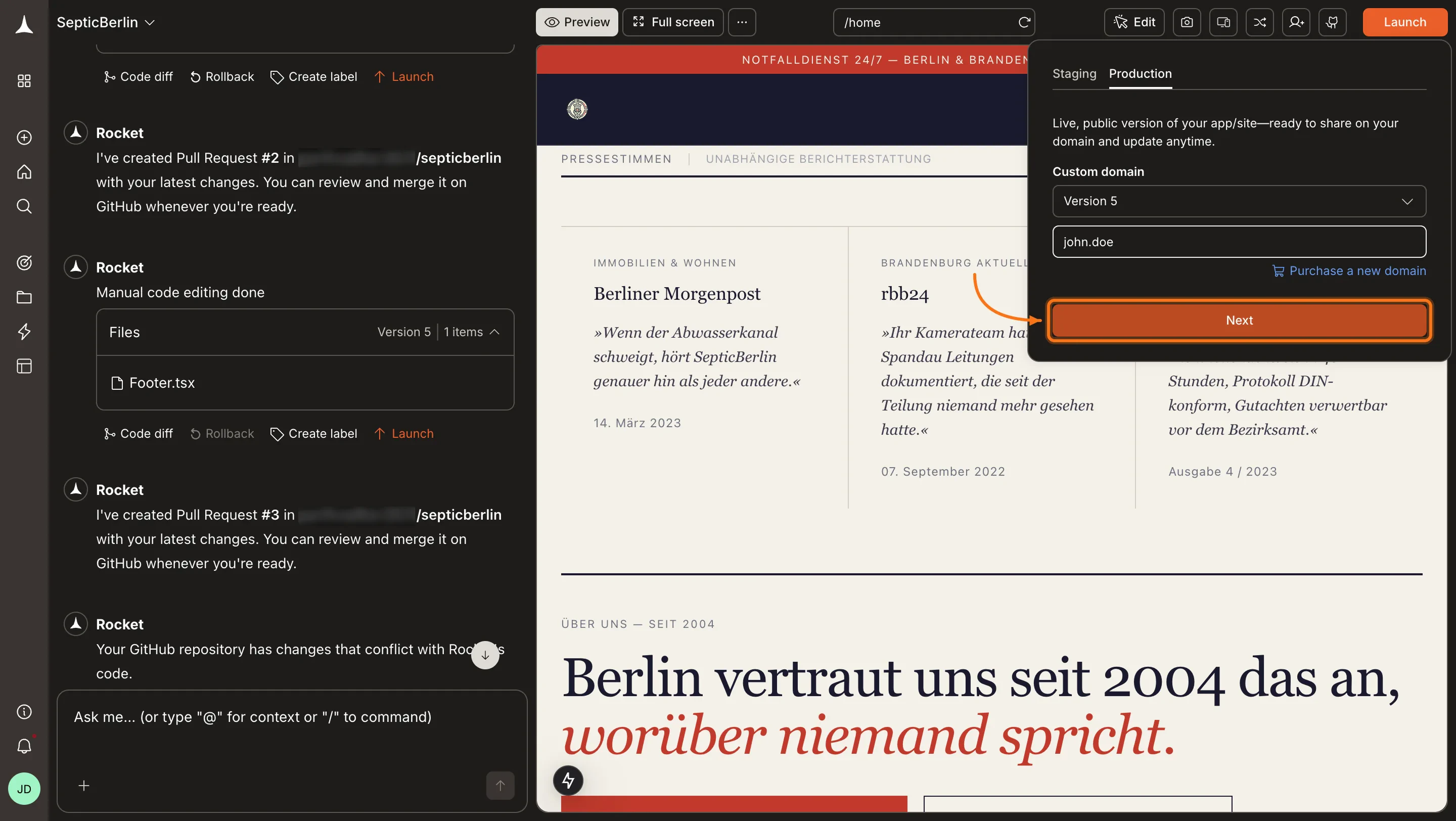
Choose which version of your app to publish from the version dropdown. Once you select a version, type your domain in the Custom domain field (for example, example.com) and click Next.
Version dropdown open in the Launch panel showing available versions.Version dropdown open in the Launch panel showing available versions.
Once you publish on a version, you can only move forward to newer versions. To go back to an earlier version, you need to unpublish and publish again from that version.
Launch panel with a version selected and a domain name entered, ready to click Next.Launch panel with a version selected and a domain name entered, ready to click Next.
3

Set up the Production Environment

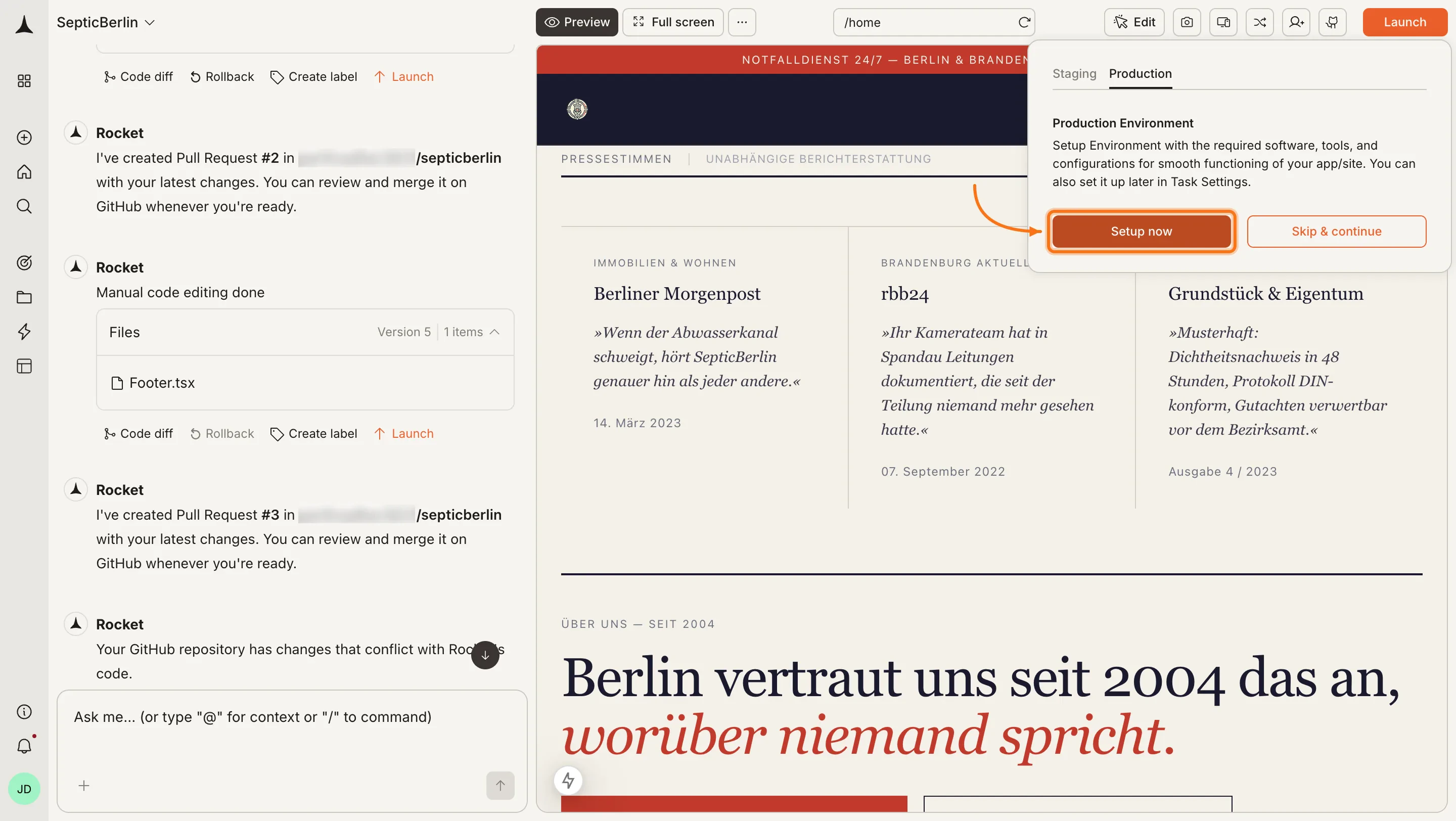
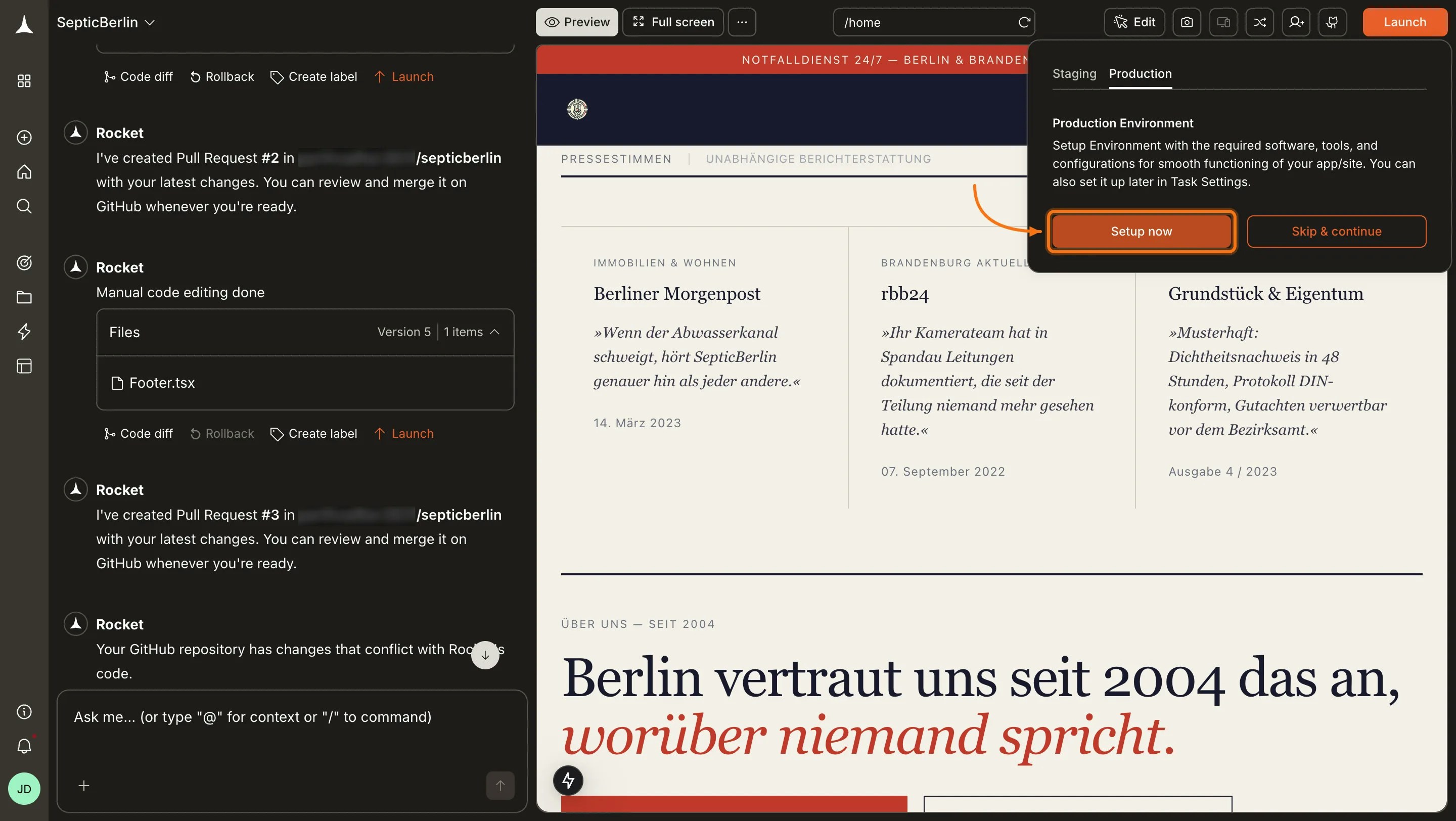
Rocket prompts you to configure your Production Environment. Click Setup now to add any required environment variables. If you have no environment variables to add, click Skip & continue.
Rocket prompt to set up the Production Environment with Setup now and Skip & continue buttons.Rocket prompt to set up the Production Environment with Setup now and Skip & continue buttons.
4

Add environment variables and click Done
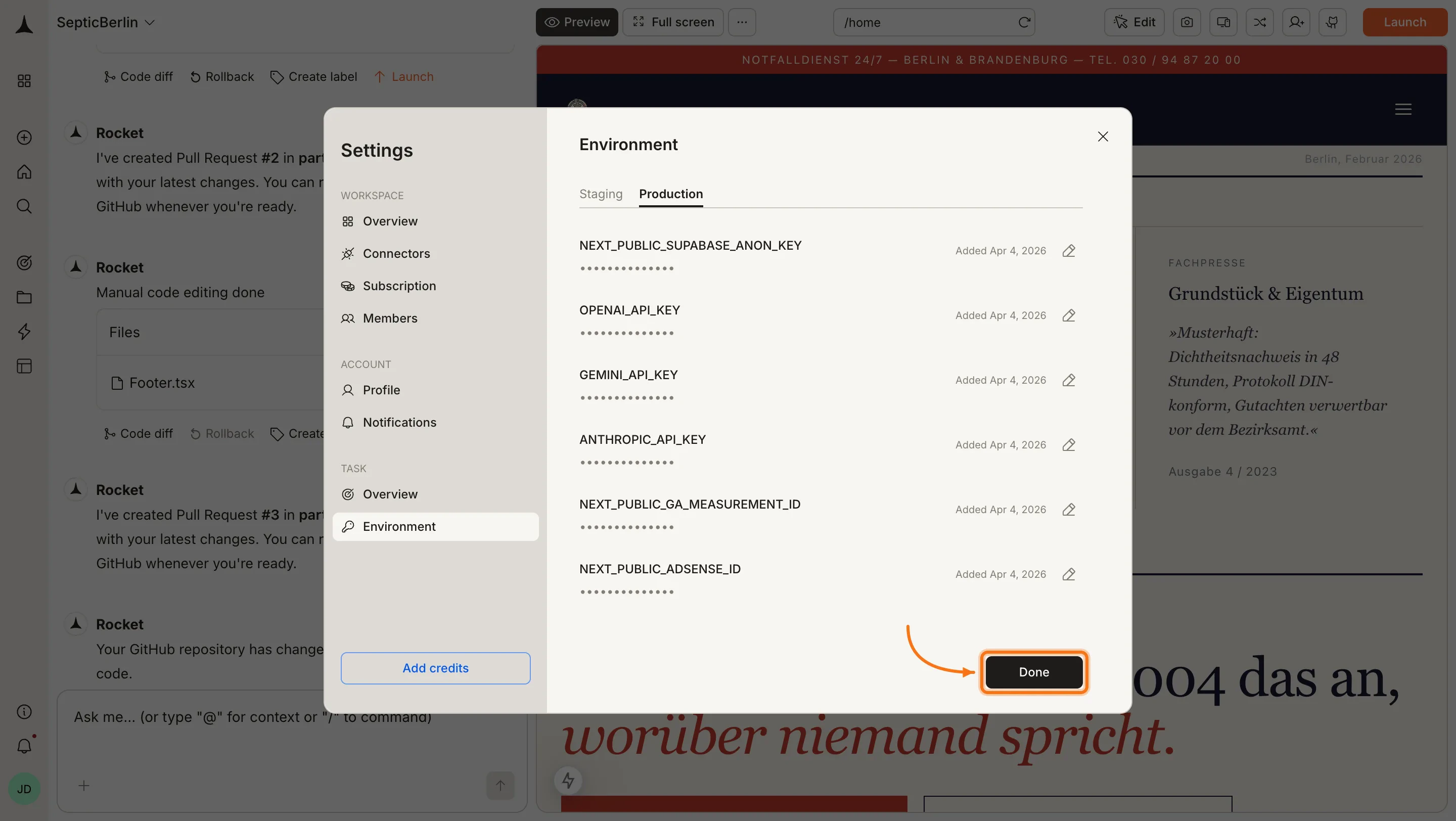
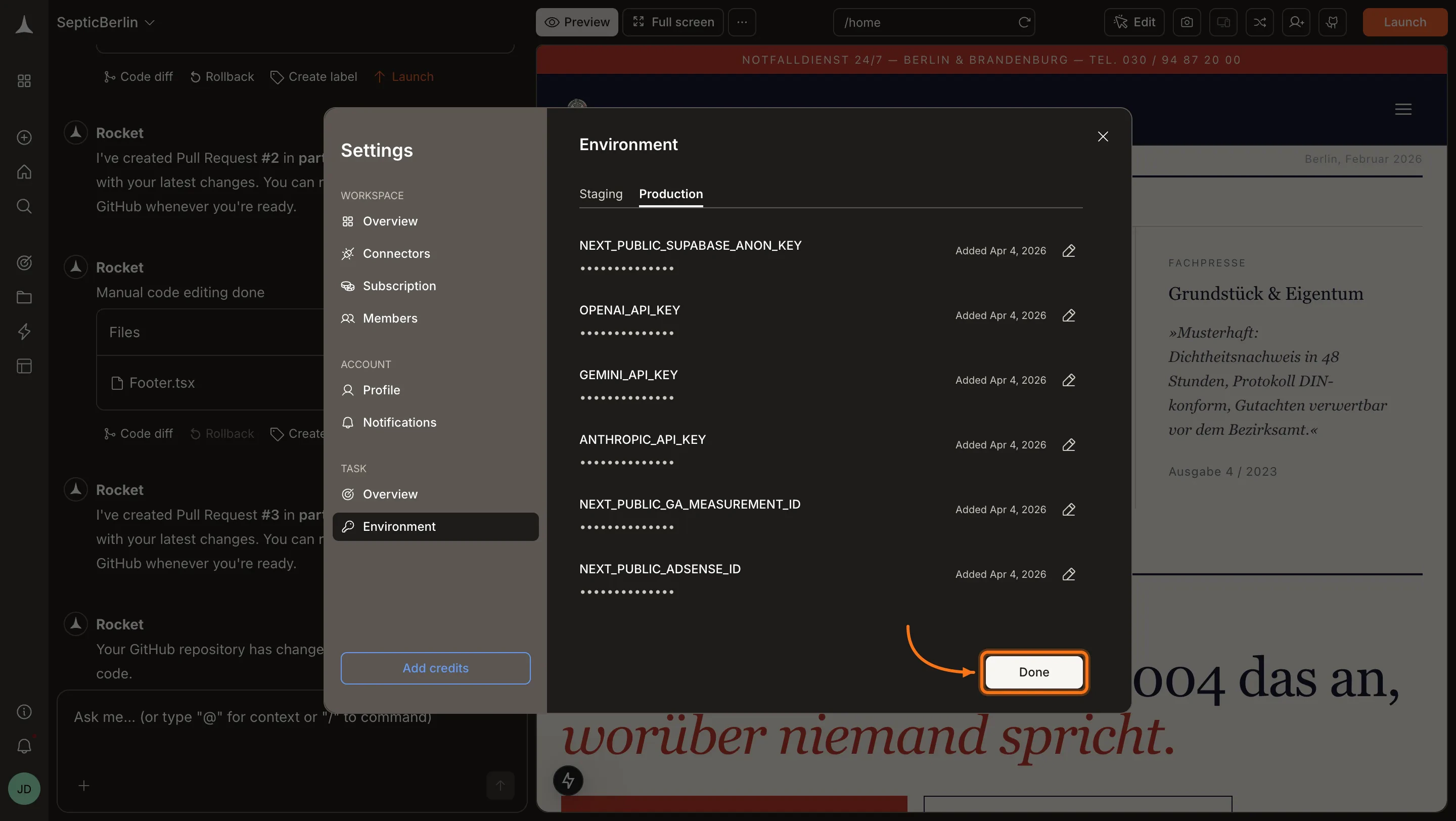
Add your required environment variables in the Production environment settings, then click Done to continue.
Production environment settings with variables added and the Done button highlighted.Production environment settings with variables added and the Done button highlighted.
5

Continue with automatic setup

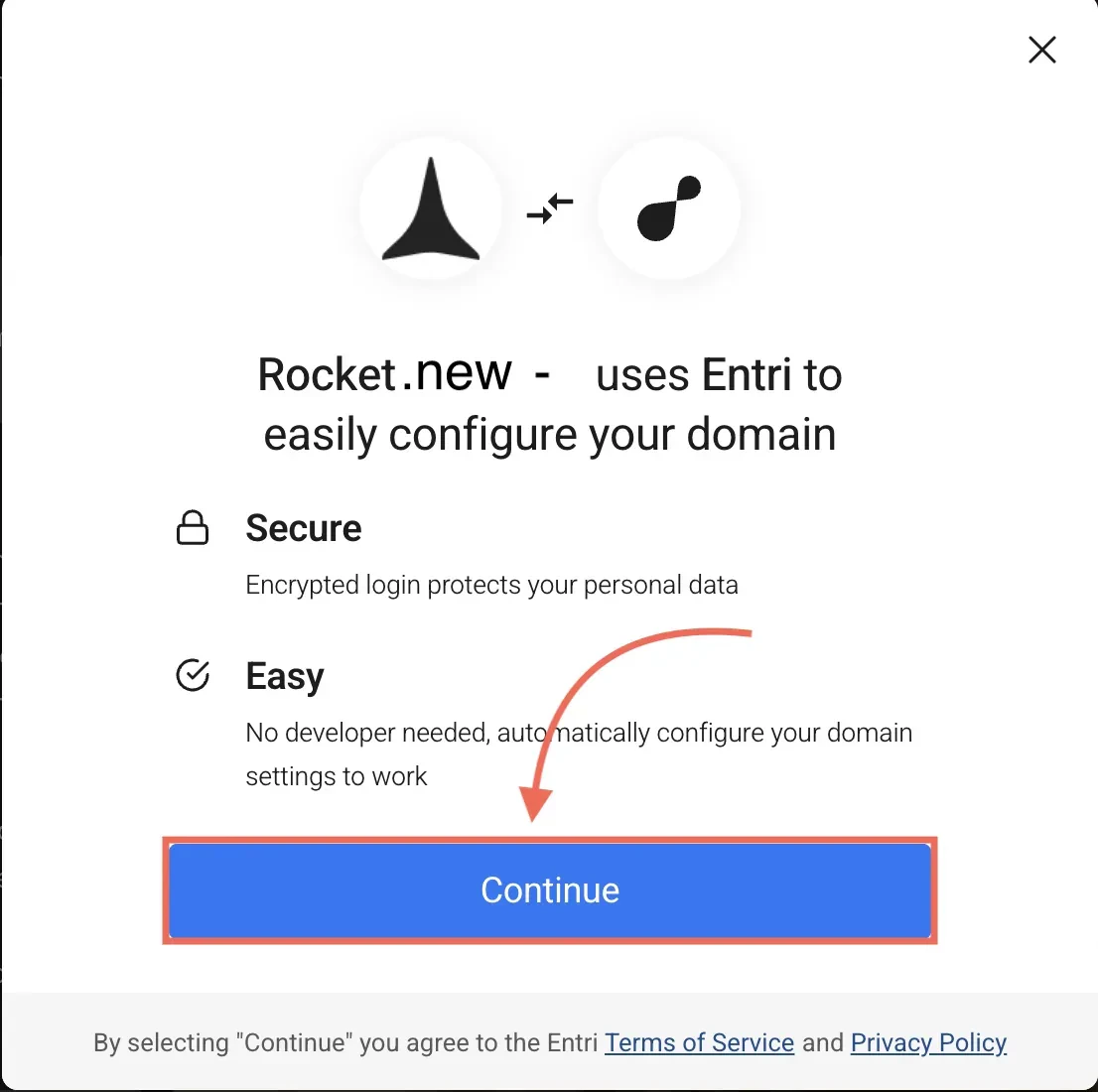
Rocket opens a popup explaining that it will configure your domain automatically. Click Continue.
Automatic domain configuration popup with Continue button highlighted.
6

Authorize with your domain provider

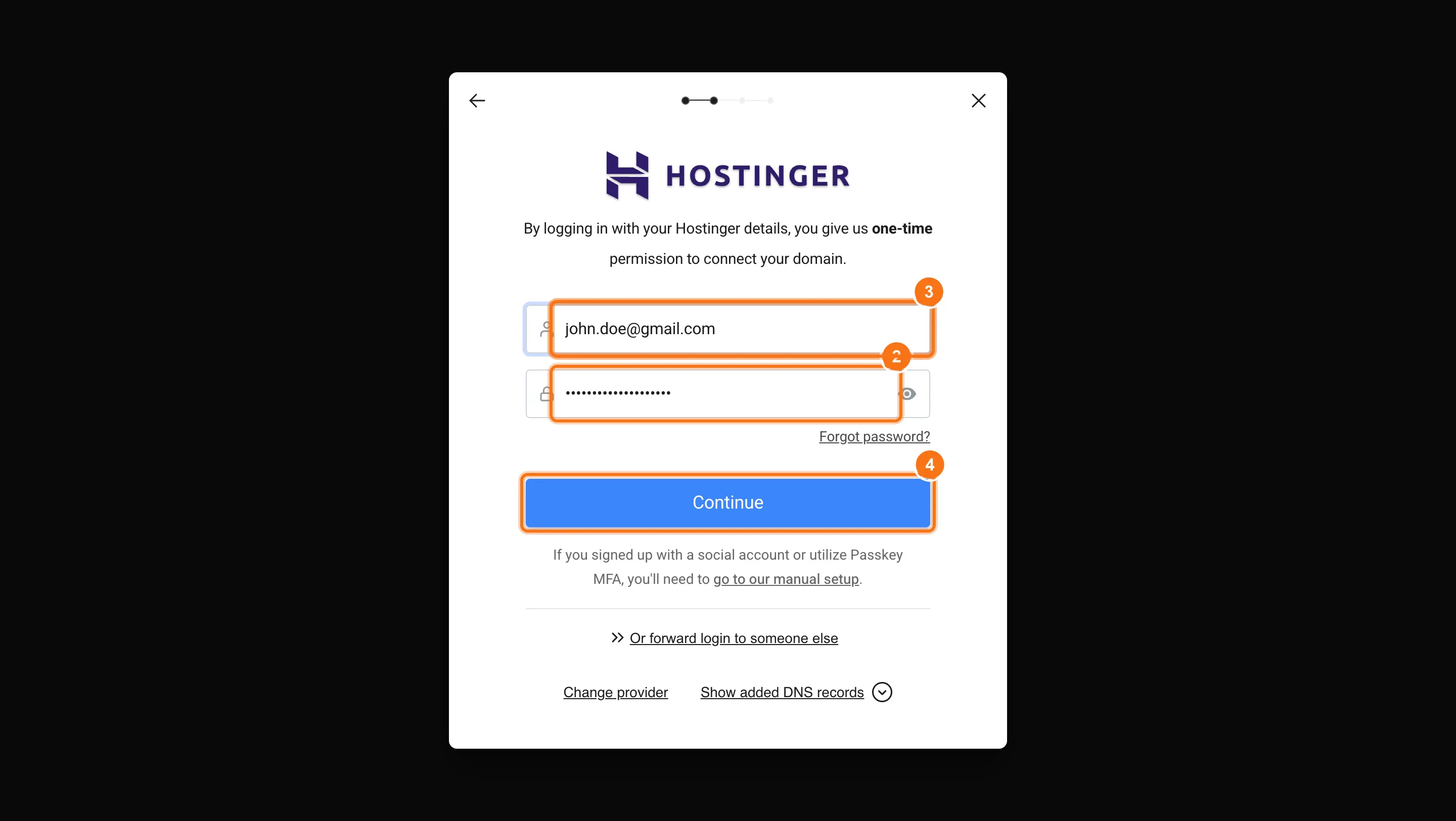
Rocket shows a login screen for your domain provider. Enter your credentials and click Continue to grant one-time permission to configure DNS.
Provider login screen asking for credentials to grant one-time DNS configuration permission.
7

Confirm the DNS update

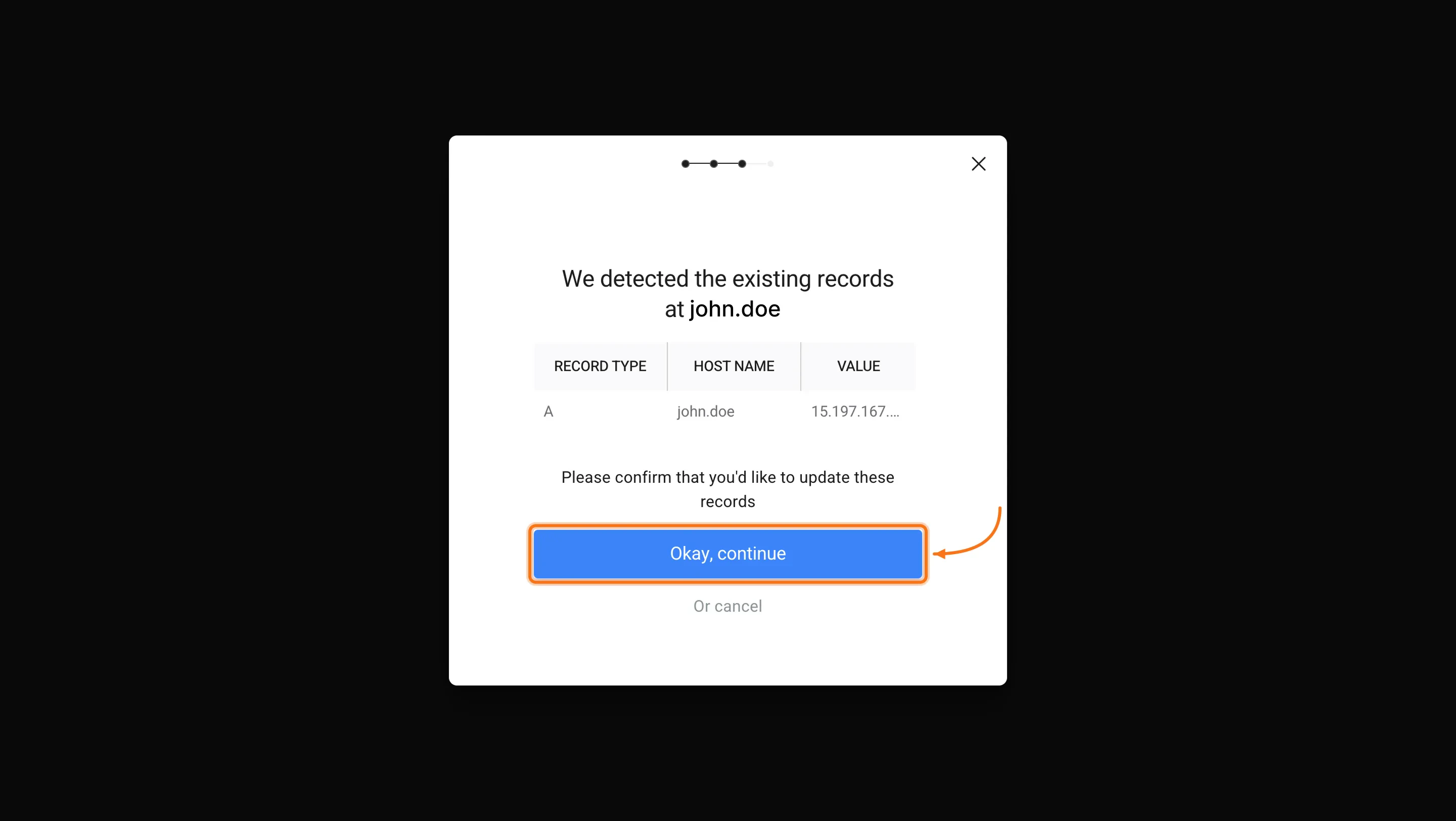
Your provider shows the existing DNS records and the new ones Rocket wants to add. Review them and click Okay, continue to approve the change.
Provider confirmation screen showing existing and new DNS records with Okay, continue button.
8

Done

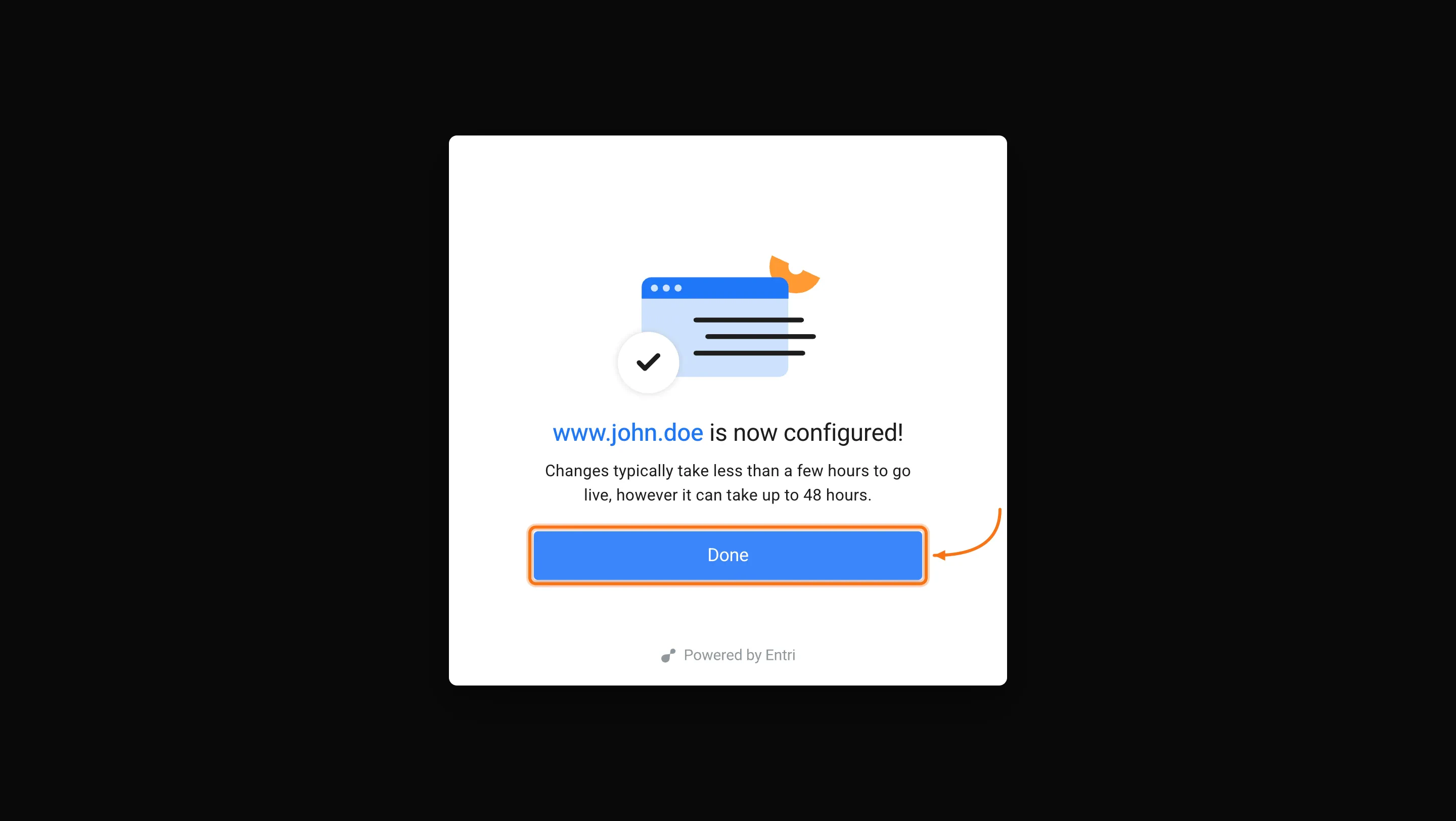
Your domain is confirmed as configured. Click Done. DNS propagation can take up to 48 hours, after which your app is live at your custom domain.
Success screen showing your domain is now configured with Done button.
Once live, the Launch panel shows your domain URL. You can click it to open your app.
Launch panel showing the custom domain is live and the URL is active.Launch panel showing the custom domain is live and the URL is active.

Manual setup (fallback)

Use this method if automatic setup is not available for your provider or did not complete successfully. Rocket shows you the exact DNS records and you add them directly in your domain provider’s dashboard.
1

Open the Production tab and select a version

Click the Launch button, select the Production tab, choose your version, enter your domain, and click Next. Complete the Production Environment step as described above.
2

Switch to manual setup

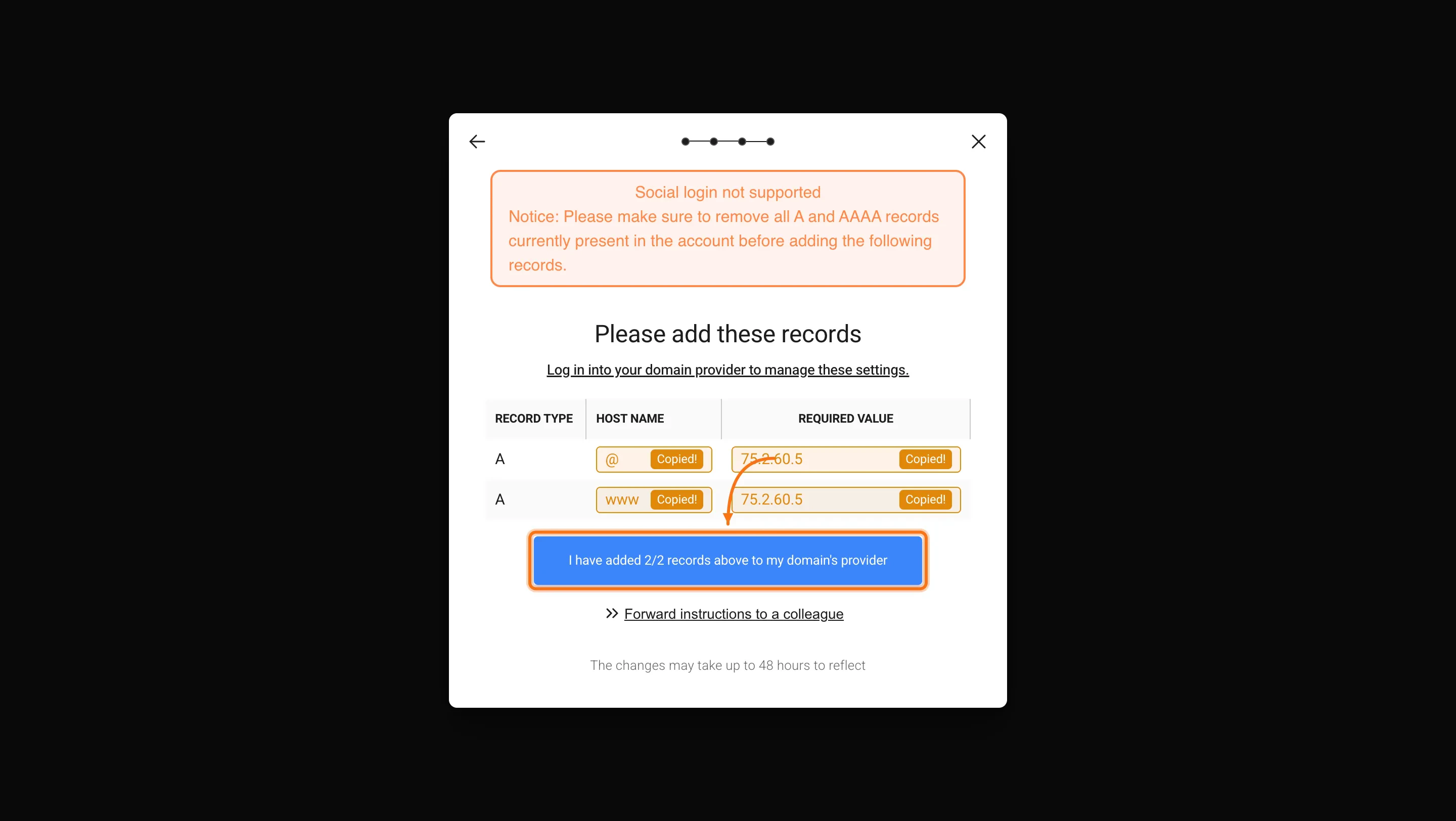
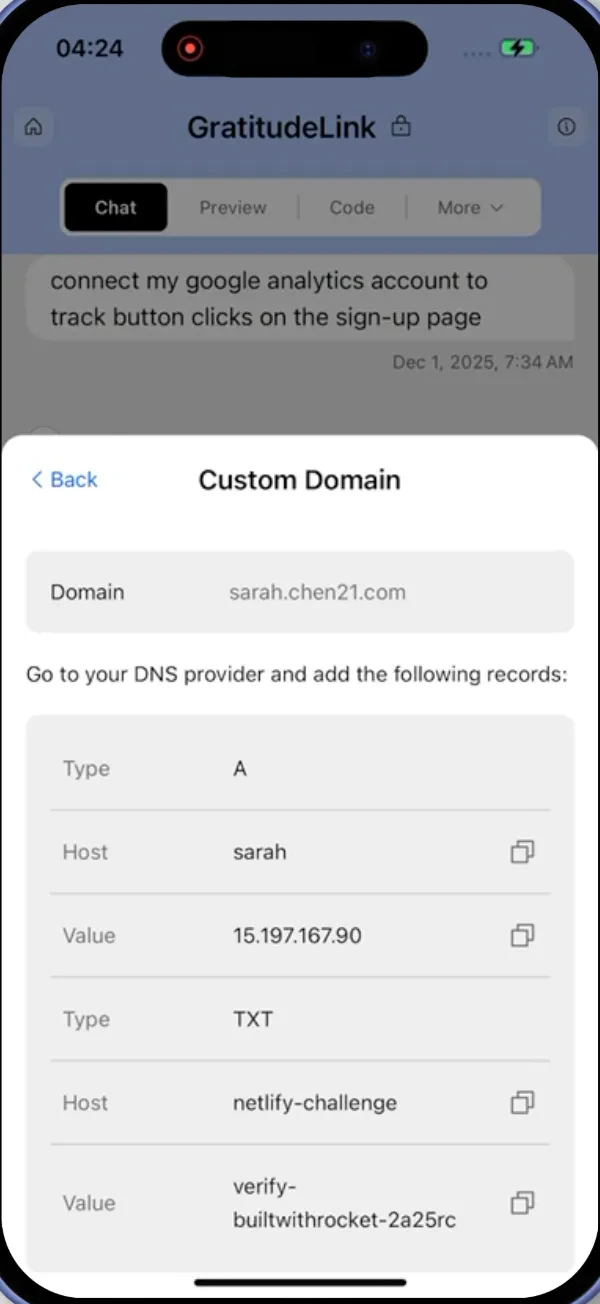
If automatic setup did not work or your provider is not supported, click Go to our manual setup on the automatic setup screen. Rocket shows you the exact DNS records to add.
Rocket manual DNS configuration screen showing record type, host name, and required values to copy.
Remove any existing A and AAAA records for your domain before adding the new ones. Conflicting records will prevent your domain from connecting.
Copy each record (Type, Host Name, Required Value). In a new browser tab, open your domain provider’s DNS settings and add them exactly as shown.
3

Confirm you have added the records

Once you have added all records in your provider’s dashboard, click I have added all records above to my domain’s provider in Rocket. Rocket starts monitoring for the DNS changes.
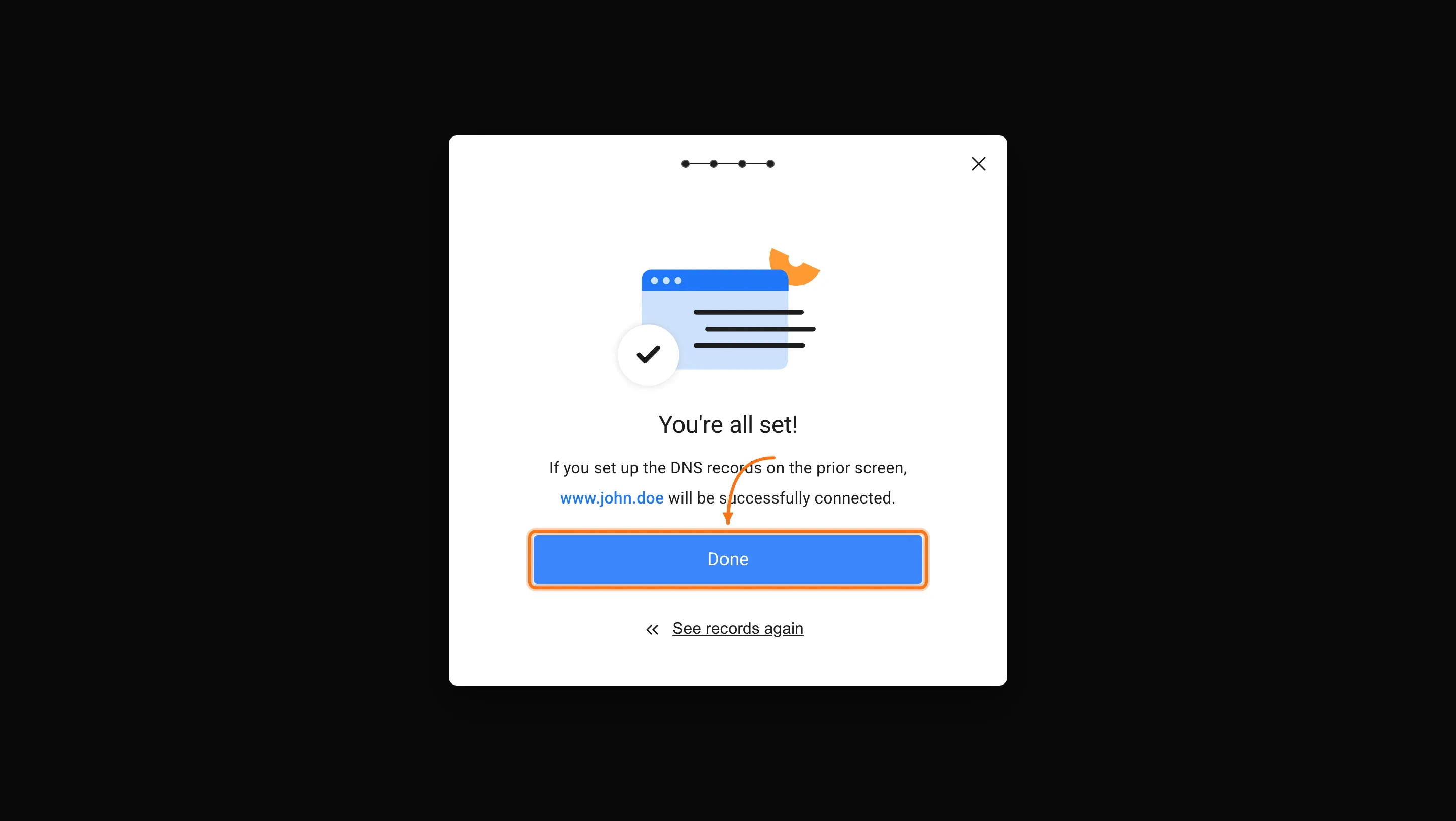
You're all set screen after confirming DNS records have been added.
DNS propagation can take up to 48 hours. Once Rocket detects the records, your domain goes live automatically.
DNS changes can take up to 48 hours to propagate. Your domain may not work immediately after setup.

Fix conflicting DNS records

If your domain is not connecting after 48 hours, you likely have conflicting DNS records.
  1. Go to dnschecker.org, enter your domain, and select A as the record type.
  2. If you see multiple different IP addresses, log in to your domain provider’s dashboard and remove any A records that do not point to the IP address Rocket provided.
  3. Wait up to 24 hours for the changes to propagate, then check the domain status in Rocket again.
Multiple A records with different IP addresses cause your domain to intermittently point to the wrong server. Keep only the Rocket IP address configured.

What’s next?

SEO & discoverability

Optimize meta tags and sitemaps so search engines find your site.

Analytics

Track visits, pageviews, and traffic sources from your dashboard.

Privacy compliance

Set up cookie consent, GDPR banners, and a privacy policy page.