Connect GitHub to push Rocket.new code to your repository
Link GitHub to Rocket.new to push generated code into your repository, keep a full commit history, and collaborate with developers on branches.
Connect GitHub and push your task code to a repository with one click. Rocket handles the Git setup automatically, no terminal needed.For Next.js TypeScript tasks, Rocket supports full two-way sync: push automatically creates a rocket-update branch and opens a pull request to main, and pull brings changes from main back into your task. For all other frameworks, GitHub integration is one-way and manual. Click Push when you want to update GitHub. No automatic pull request is created.
GitHub connects via OAuth, so no API key is needed. It is a workspace-level connector, so connect it once and it is available across all tasks.
Web Browser
Mobile App
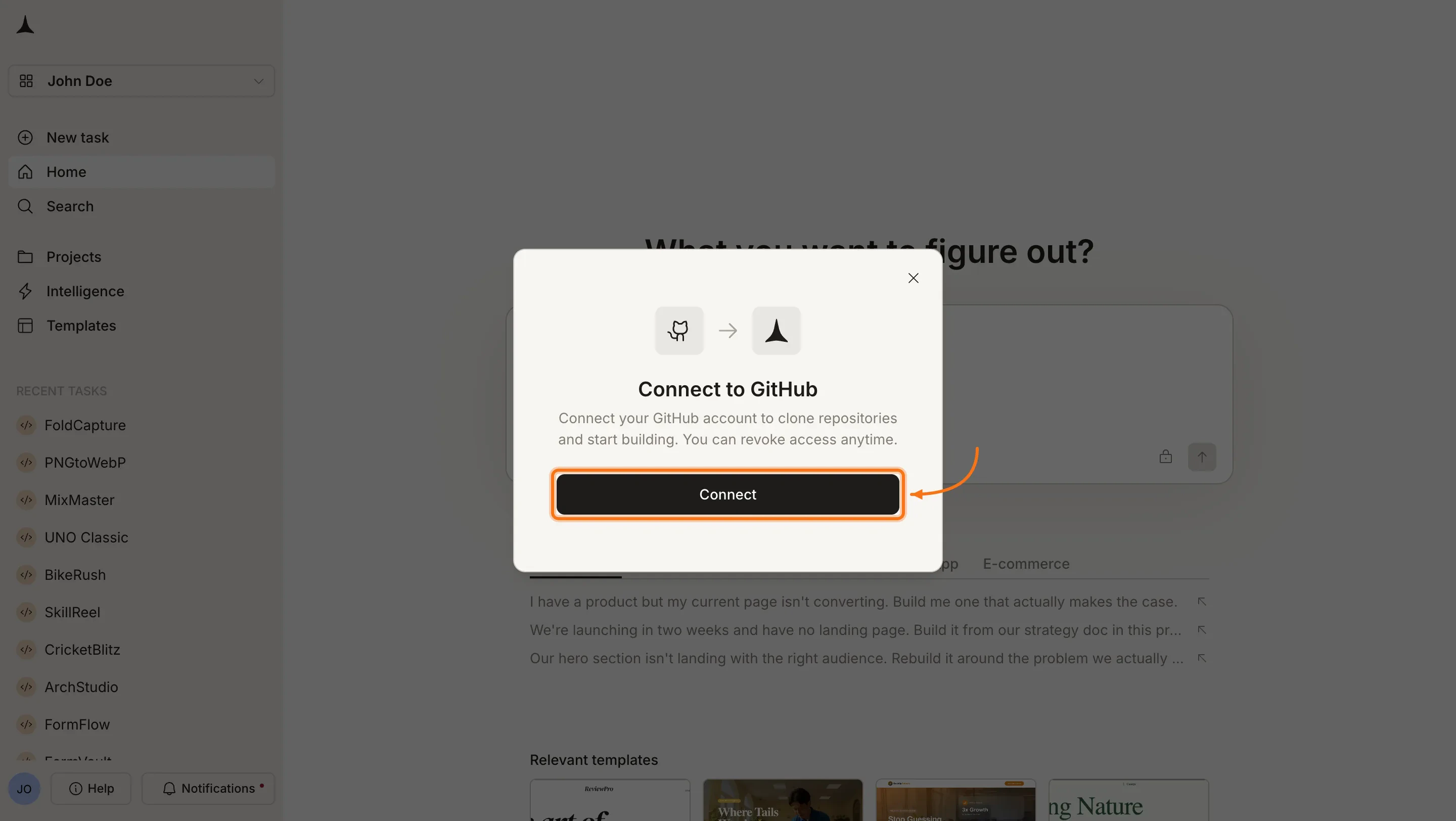
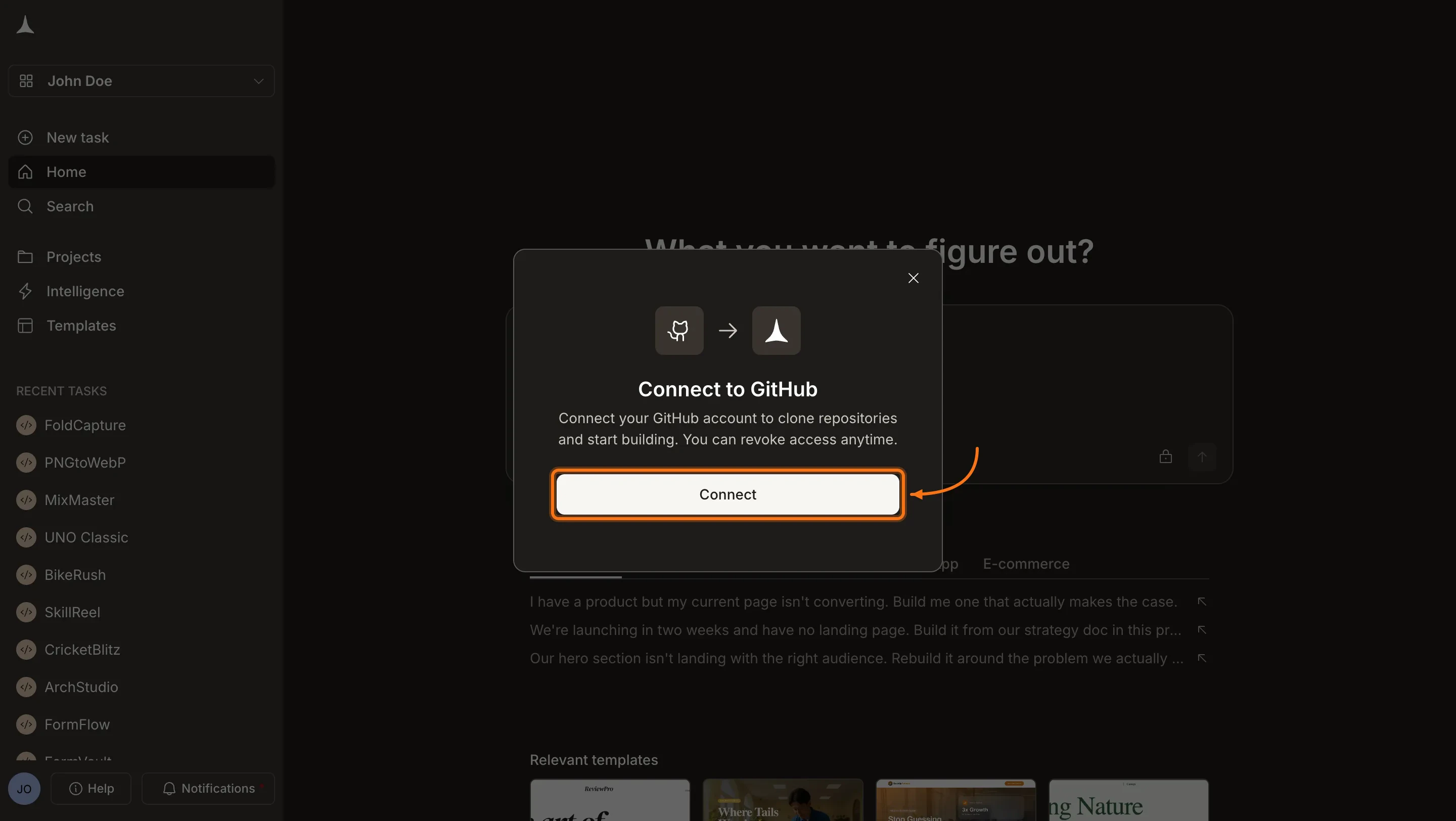
You can connect from four places. All do the same thing.Option 1: When creating a task (Clone from GitHub)Click the + button at the lower left of the input box on the home screen and select Clone from GitHub. If you have not connected GitHub yet, Rocket prompts you to authorize at this point.
Import from GitHub
Clone a Next.js TypeScript repo and continue building with AI.
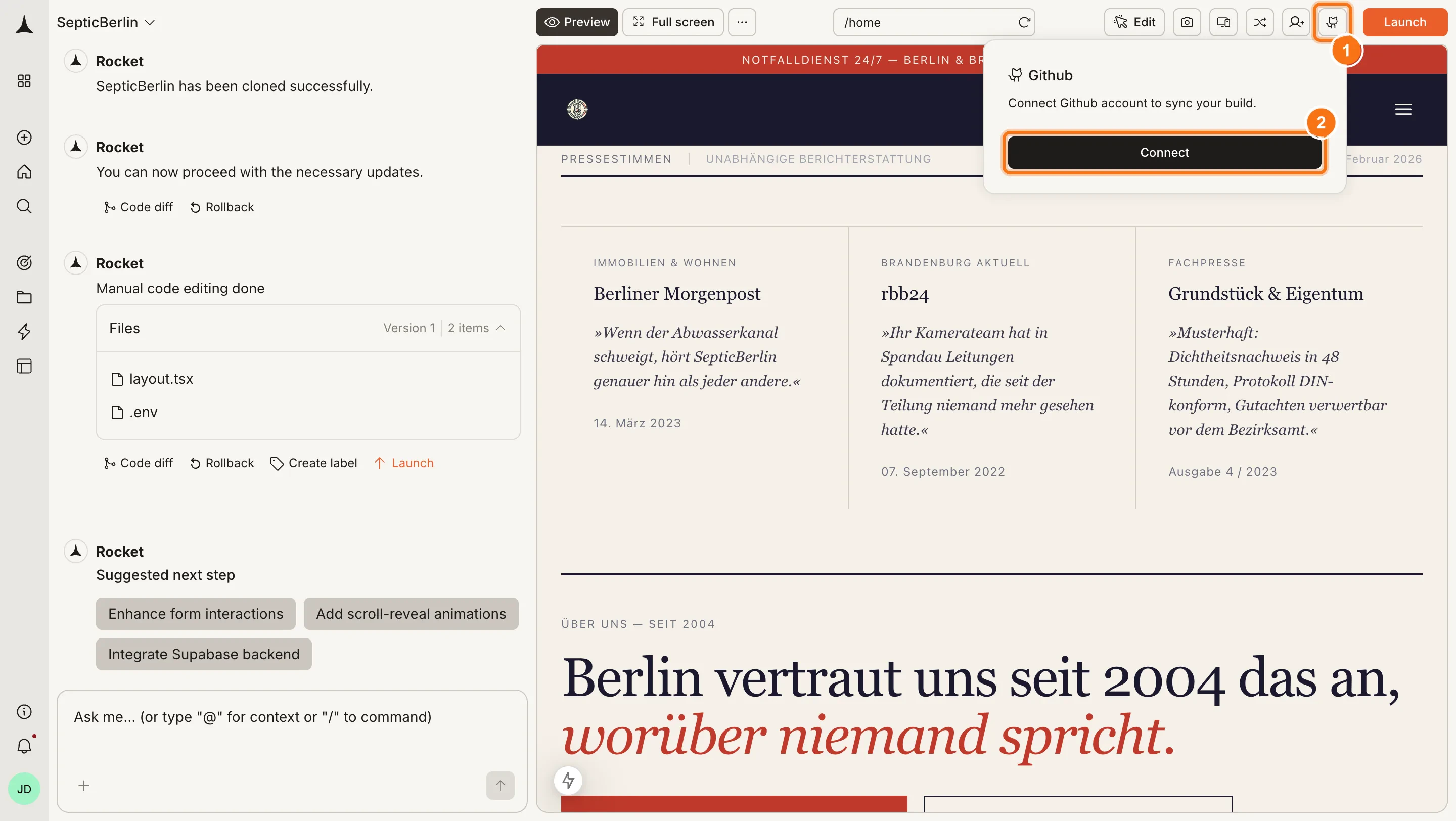
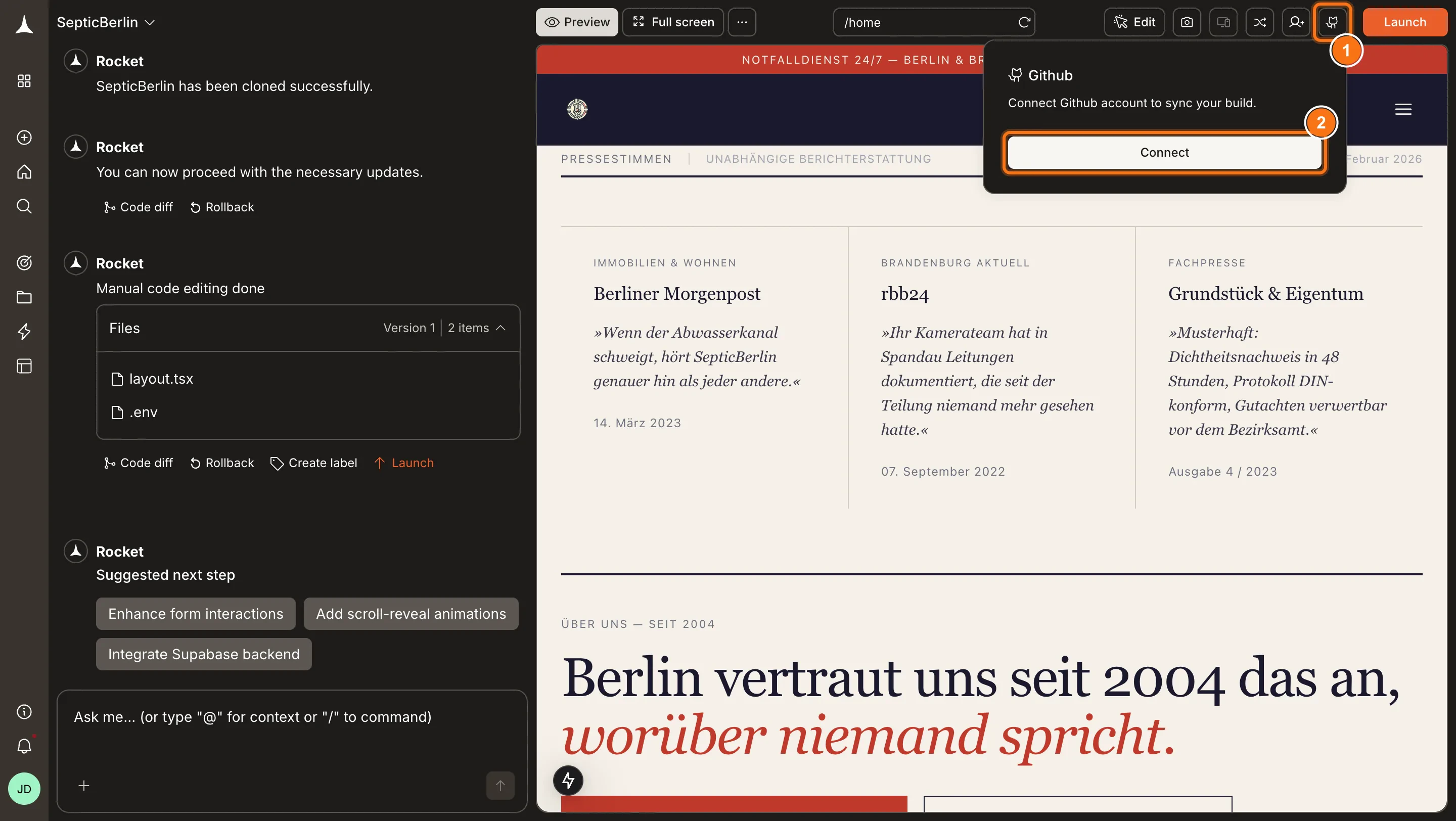
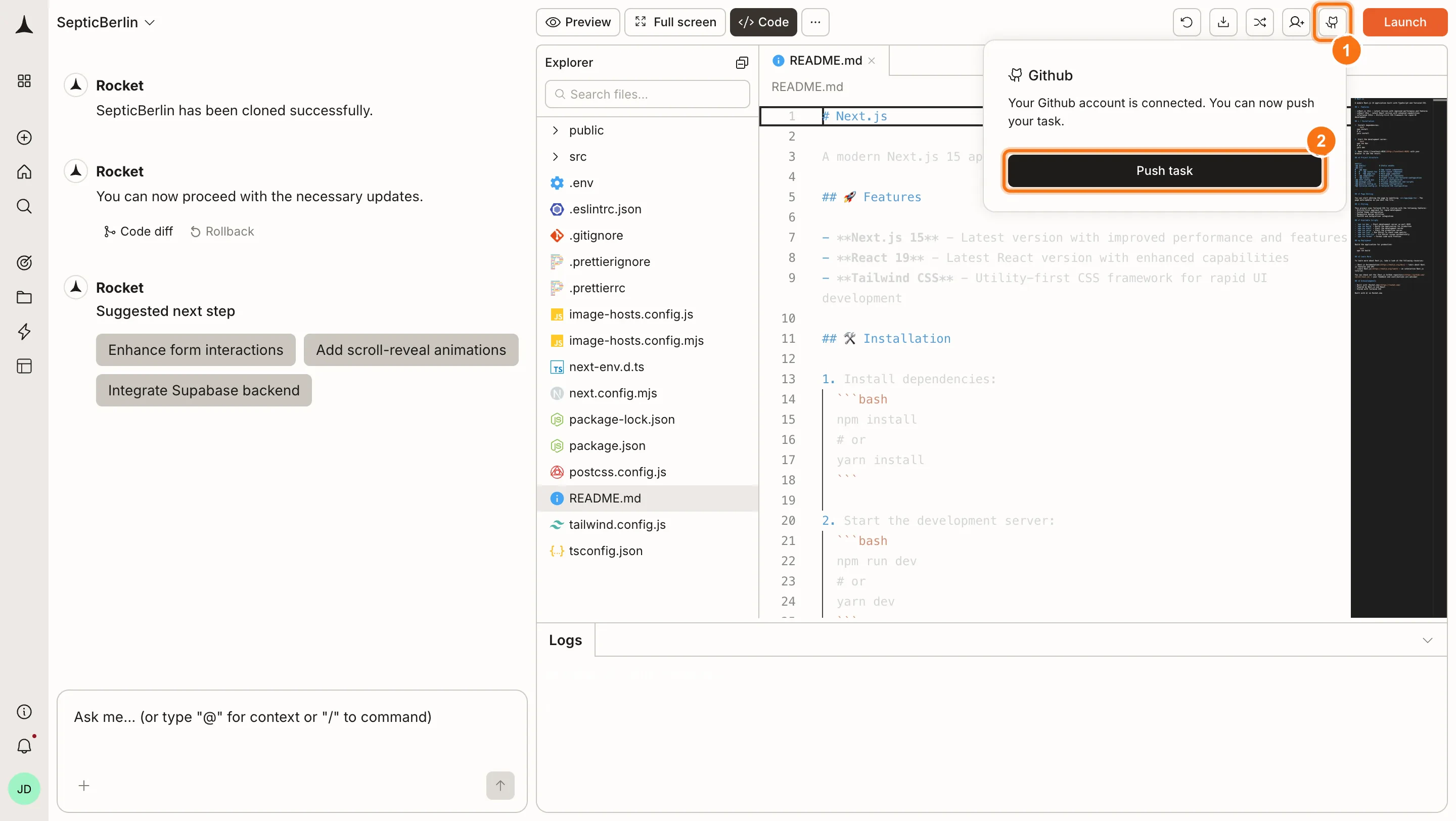
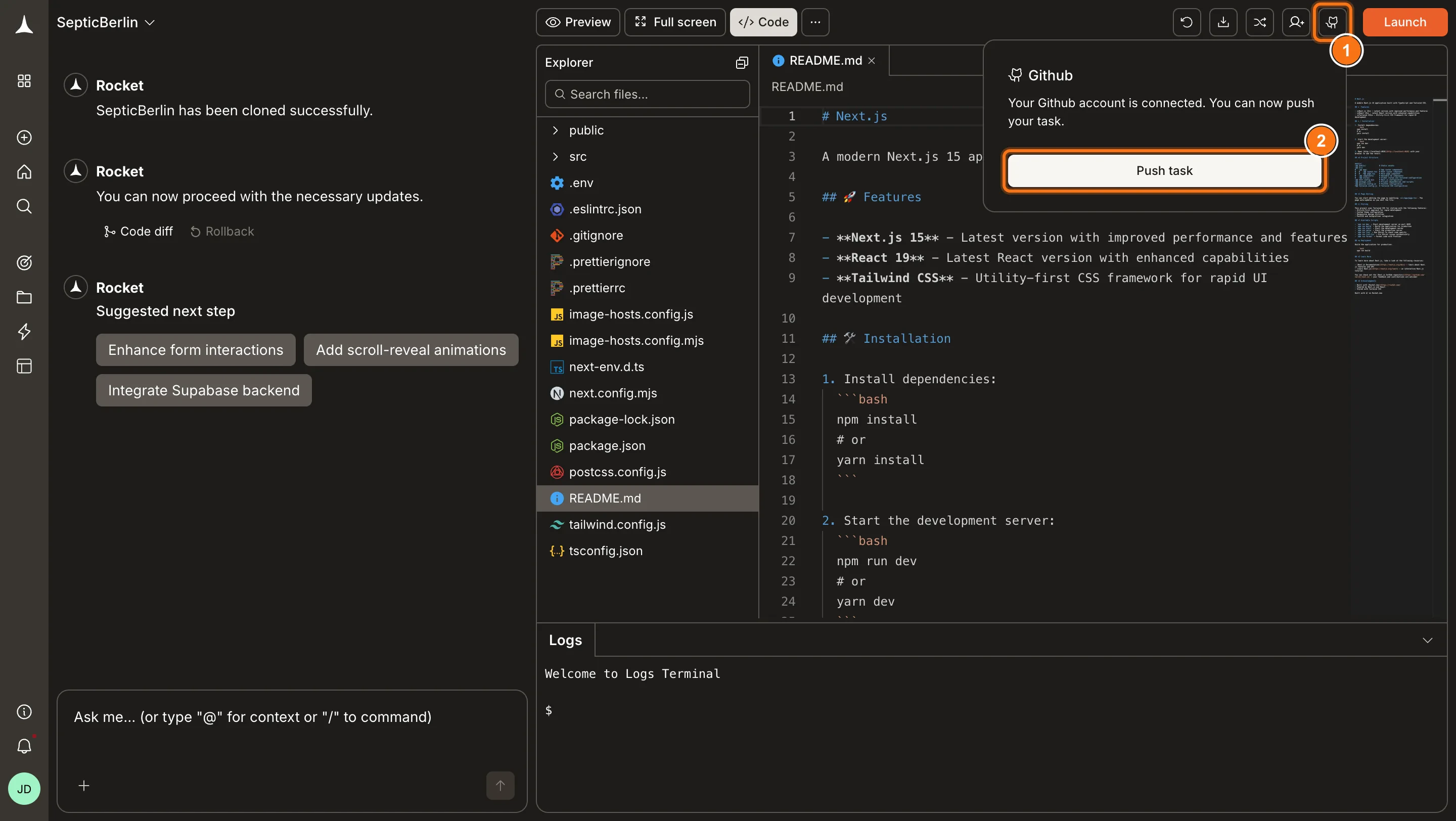
Option 2: From the GitHub button in the toolbarClick the GitHub icon in the top-right of the code view toolbar. A popup opens with a Connect button.
GitHub connect popup from the toolbar
Option 3: From the Connectors tabClick the ... button in the preview toolbar, then select Connectors.
Open Connectors from the toolbar
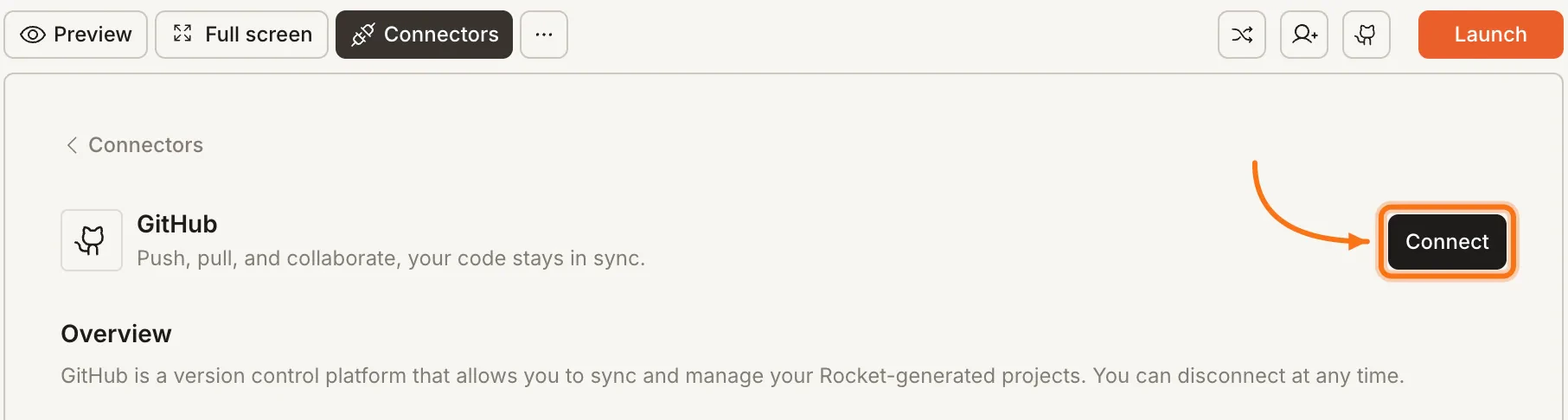
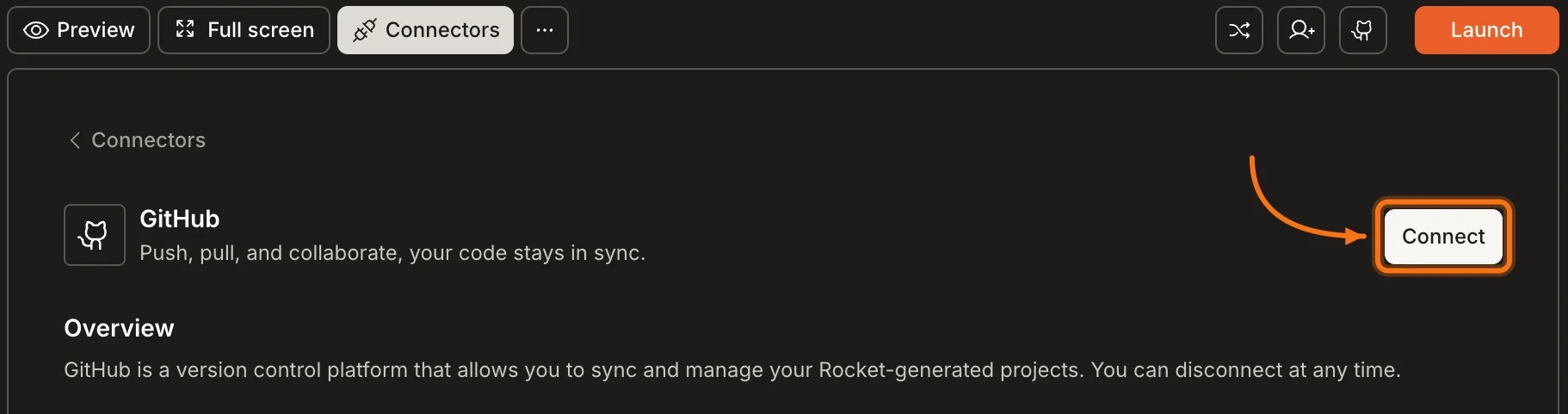
Click the GitHub card, then click Connect.
GitHub card in the Connectors panel
Option 4: From workspace Settings
Connect from workspace Settings
Connect once from Settings and it is available across all tasks.
After clicking ConnectYou are redirected to GitHub’s authorization page. Sign in if prompted, review the permissions, and click Authorize DhiWisePvtLtd.
Authorize Rocket on GitHub
After authorization you are redirected back to Rocket with GitHub connected.
Permissions Rocket requests from GitHub: create new repositories on your behalf, read public and private repo names and metadata, and access your GitHub username and email address.
Disconnect
Disconnect a service
Disconnect or switch accounts from workspace Settings.
You can connect from two places. Both do the same thing.Option 1: From the GitHub button in the toolbarTap the GitHub icon in the toolbar. In the popup, tap Connect to begin authorization.Option 2: From the Connectors tab
1
Open More menu
Tap the More button in the header.
2
Open Integrations
Tap Integrations.
3
Connect GitHub
Tap the GitHub card, then tap Connect.
After tapping ConnectSign in to GitHub if prompted, review the permissions, and tap Authorize DhiWisePvtLtd. You are redirected back to Rocket with GitHub connected.
Permissions Rocket requests from GitHub: create new repositories on your behalf, read public and private repo names and metadata, and access your GitHub username and email address.
Rocket automatically creates a repository for you.
Select a repository and push
Push again anytime to update the repository with your latest changes.For Next.js TypeScript tasks, Rocket pushes to the rocket-update branch and automatically opens a pull request to main each time. After the initial push, the button changes to Pull from GitHub so you can bring in the latest state of main from your local IDE or from teammates.For all other frameworks, clicking Push sends your code to GitHub but no automatic pull request is created. Push manually whenever you want to update.
Two-way sync for Next.js TypeScript. After pushing, Rocket auto-creates a PR to main and the button switches to Pull from GitHub so you can import changes back into Rocket.
One-way sync for other frameworks. Non-Next.js tasks support manual push only. No automatic PR is created. Always make changes in Rocket first, then click Push when ready.
Branch behavior. For Next.js TypeScript, Rocket pushes to rocket-update and opens a PR to main. Pull always reads from main.
Repository naming. Rocket automatically creates a repository for your task. Use a clear task name so repos are easy to find.
Public vs. private. Public repos are great for portfolios. Private repos are better for client work or proprietary tasks.
Permissions are scoped. Rocket only requests access to create repos and read metadata. It does not delete repos or modify existing code on GitHub.