Point Rocket at your Strapi instance and describe the content experience you want in chat. Rocket reads your content types, generates the pages, and wires up the data.
This connector is only available for Next.js TypeScript web build tasks.

What you can do

Blog with rich content

Publish articles with images, categories, and author profiles managed in Strapi.

Documentation site

Structured docs with sidebar navigation and versioned content from Strapi.

Product catalog

Display products with images, descriptions, pricing, and variant options from Strapi.

Dynamic page sections

Render pages from Strapi content types with modular blocks like heroes, feature grids, and CTAs.

Team or directory page

Showcase team members, partners, or directory listings pulled from Strapi.

Quick start

1

Get your Strapi credentials

You need two things: your Instance URL (e.g. https://your-project.strapiapp.com) and an API token from your Strapi Admin Panel under Settings > API Tokens.Don’t have a Strapi instance yet? See Set up your Strapi instance below.
2

Connect in chat

Open any Rocket task and type:
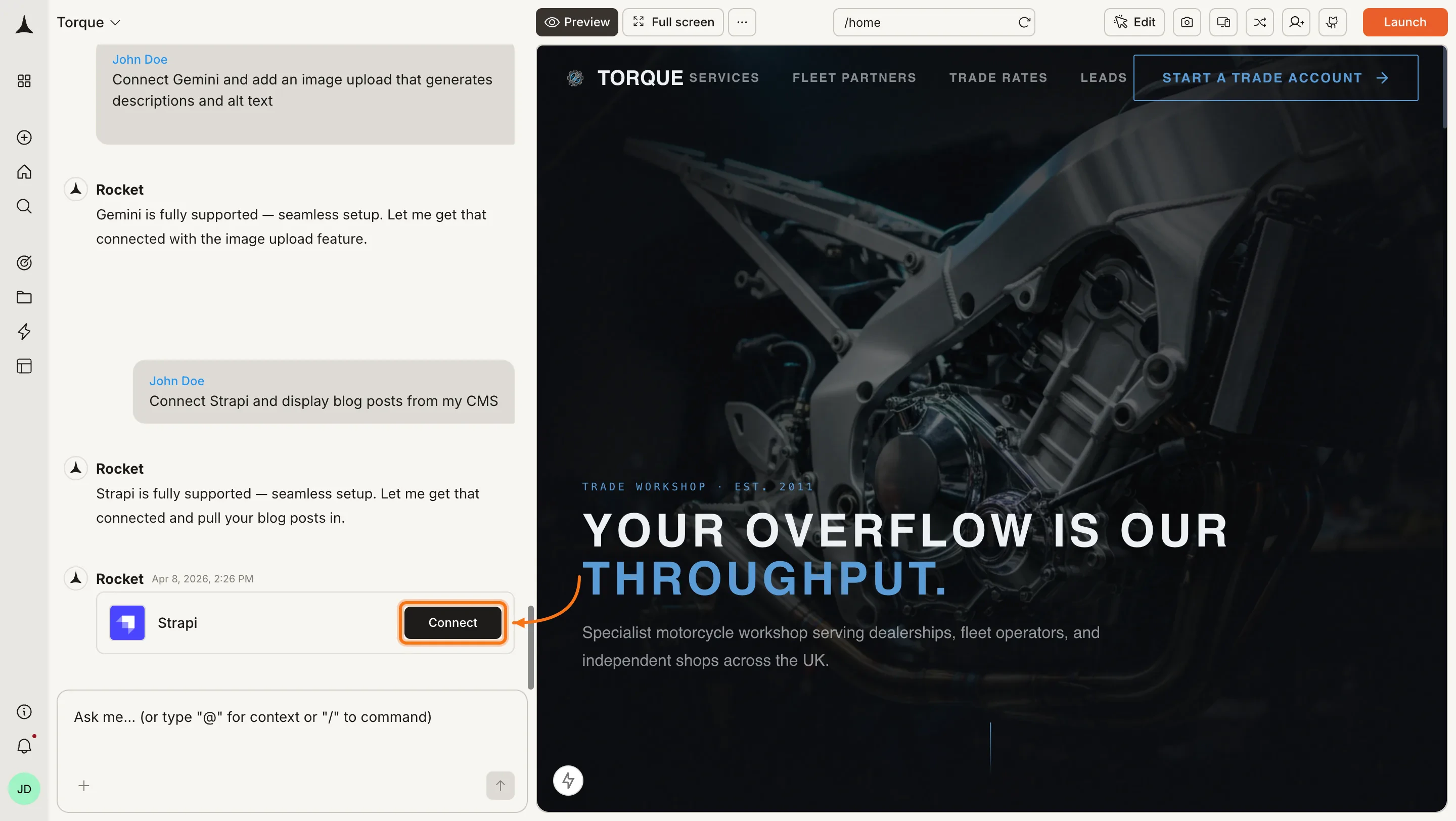
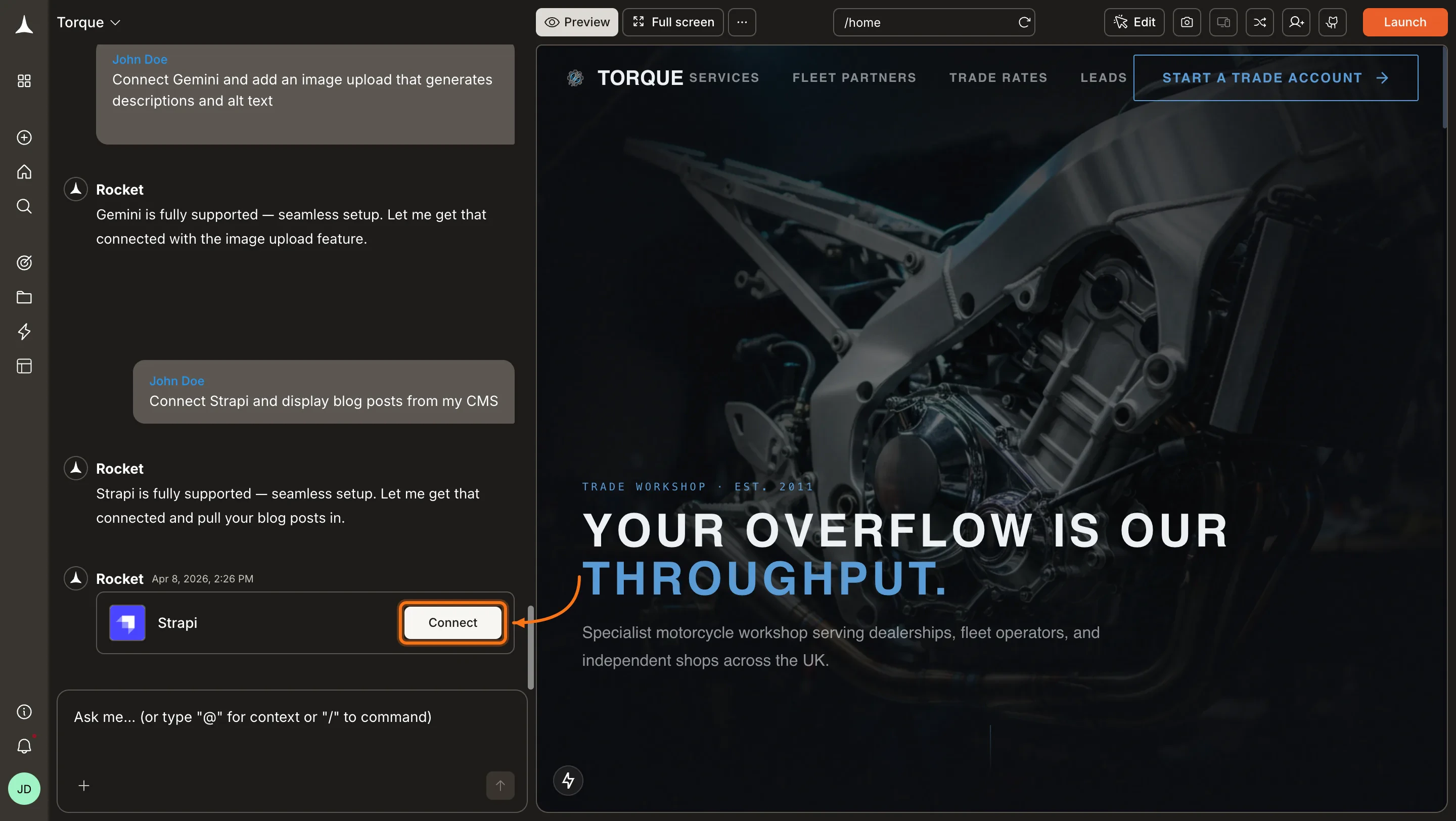
Connect Strapi and display blog posts from my CMS.
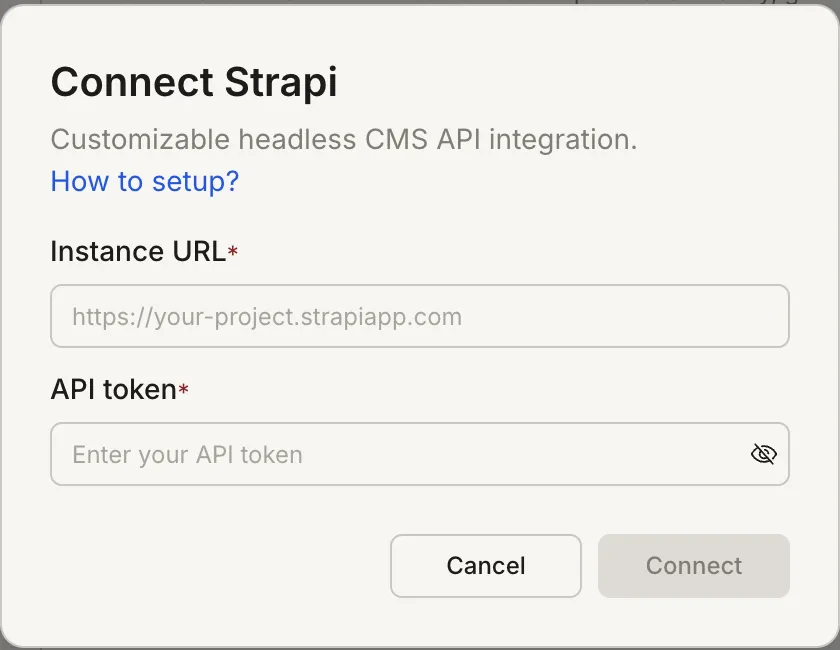
Rocket detects the intent and shows a Connect button. Click it, enter your Instance URL and API token, then click Connect.
3

Describe what you want to build

Once connected, describe the page or content experience in chat. Rocket reads your content types and builds it.
Strapi is a task-level connector. Each Rocket task connects to its own Strapi instance independently.

Before you connect

You need two things: your Strapi project URL (e.g. https://your-project.strapiapp.com) and an API token from your Strapi Admin Panel.

How to create a Strapi API token - Strapi documentation
Never paste your API token directly into chat. Always use the secure connection popup. If a token is ever exposed, revoke it from the Strapi Admin Panel and create a new one.
Strapi is a task-level connector. Each Rocket task connects to its own Strapi instance independently.

Connect Strapi

Both options below open the same popup where you enter your Instance URL and API token.
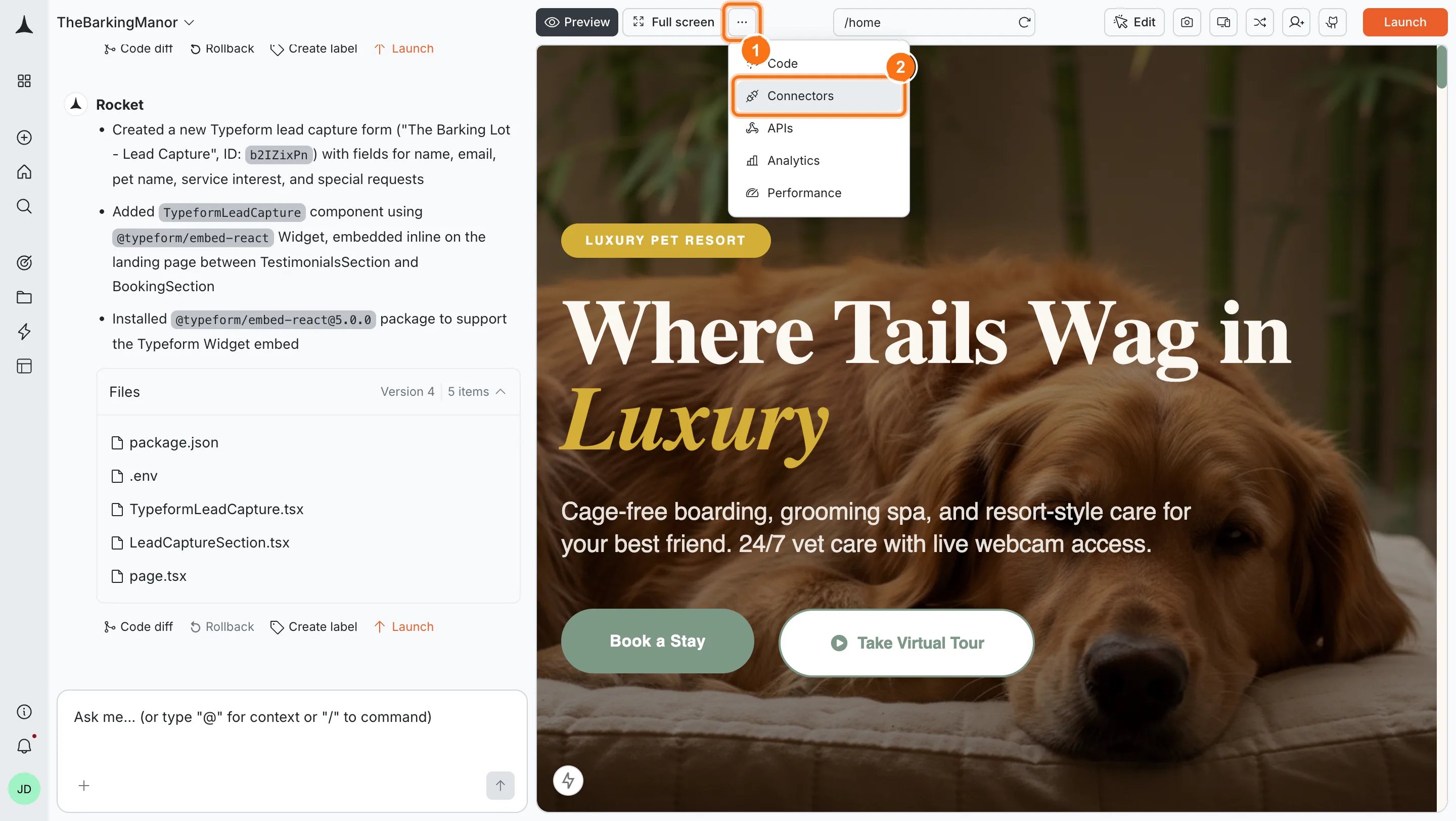
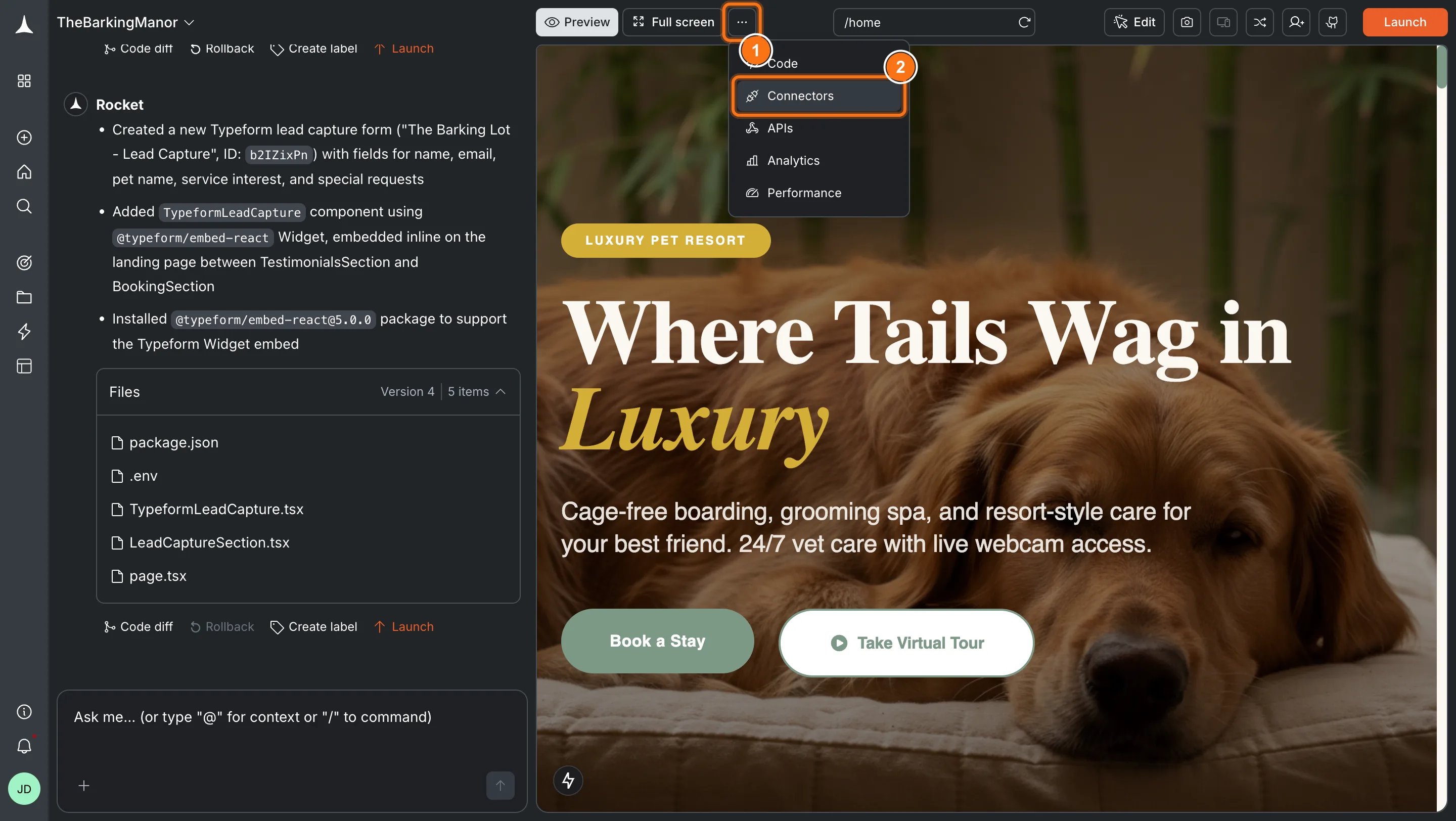
Option 1: From chatType a prompt that mentions Strapi - for example, Connect Strapi and display blog posts from my CMS. Rocket detects the intent and shows a Connect button inline. Click it and the popup opens.Option 2: From the Connectors tabClick the ... button in the preview toolbar, then select Connectors.
Toolbar dropdown with Connectors option highlighted.Toolbar dropdown with Connectors option highlighted.
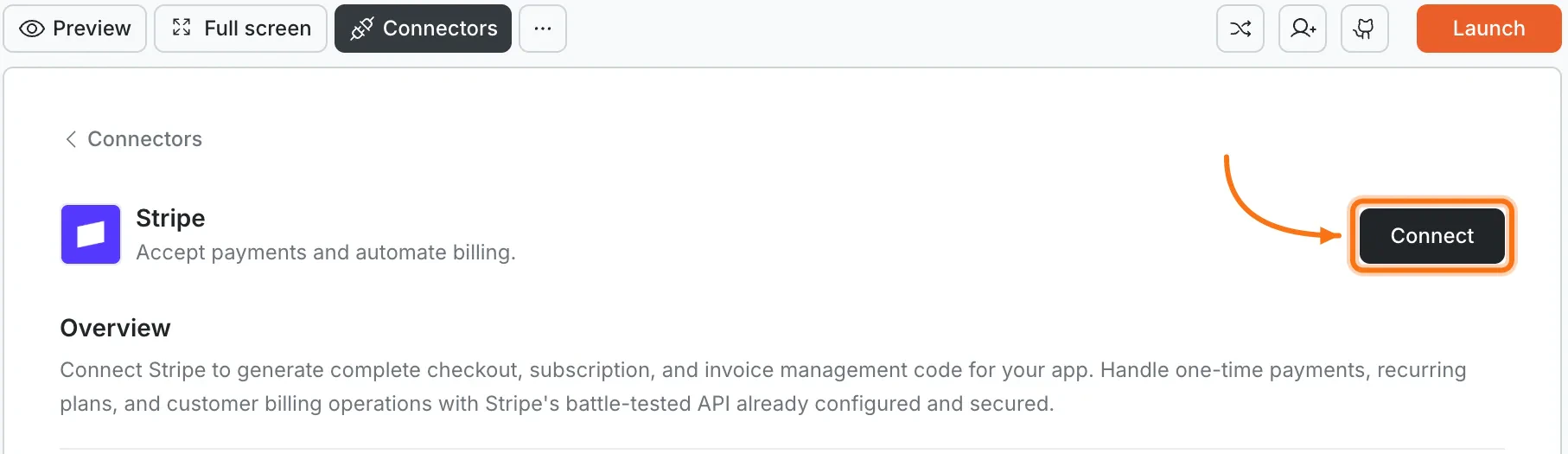
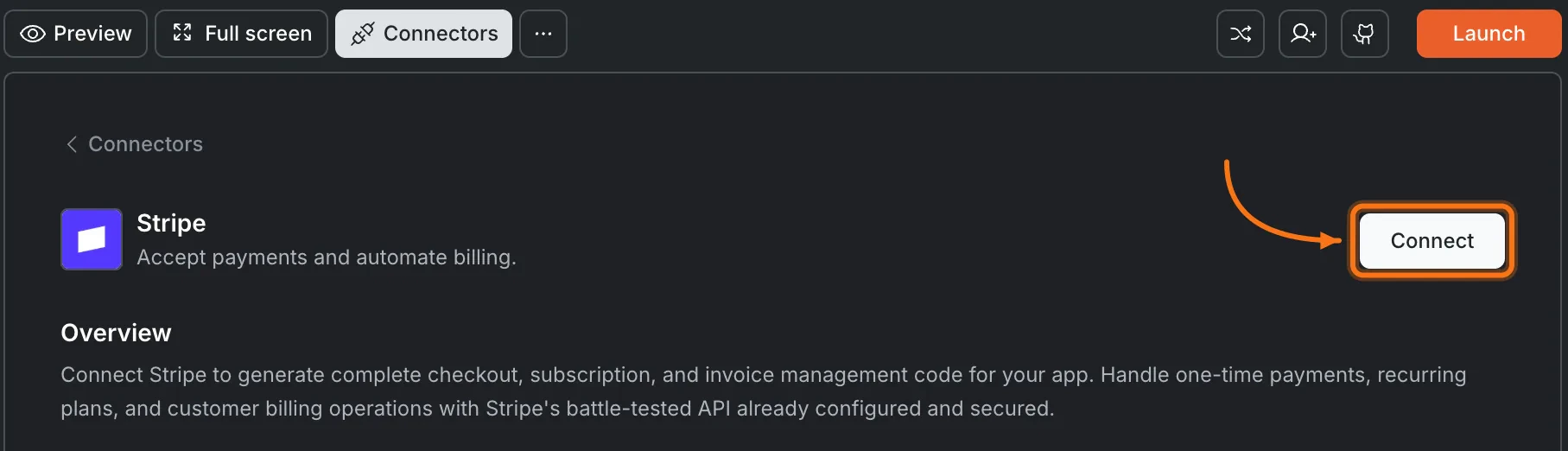
Click the Strapi card, then click Connect.
Connectors panel showing the Strapi card with a Connect button.Connectors panel showing the Strapi card with a Connect button.
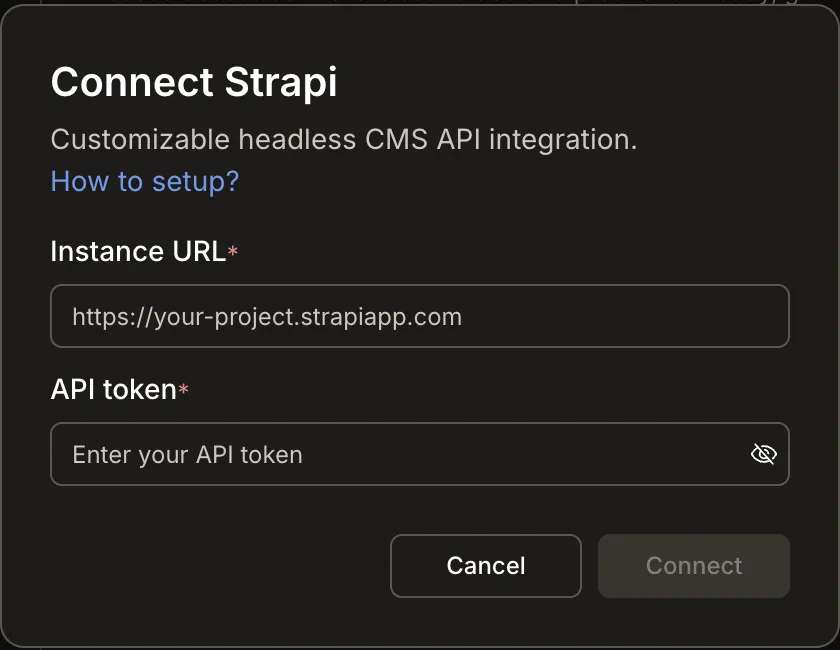
After clicking ConnectA popup opens. Enter your Instance URL and API token, then click Connect.
Connect Strapi popup with Instance URL and API token fields.Connect Strapi popup with Instance URL and API token fields.
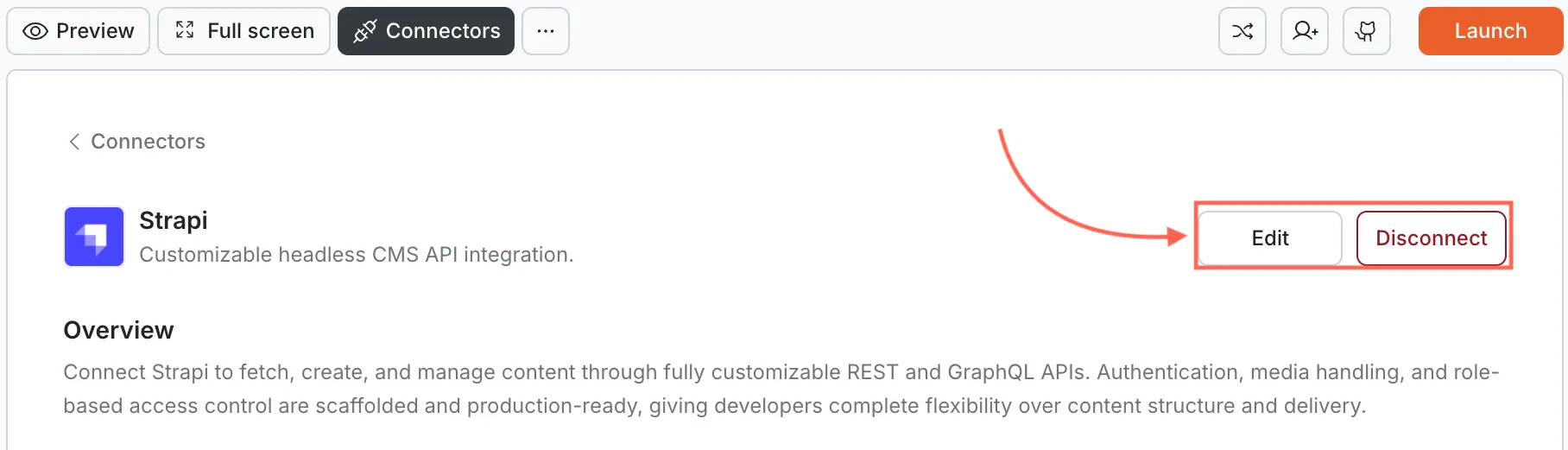
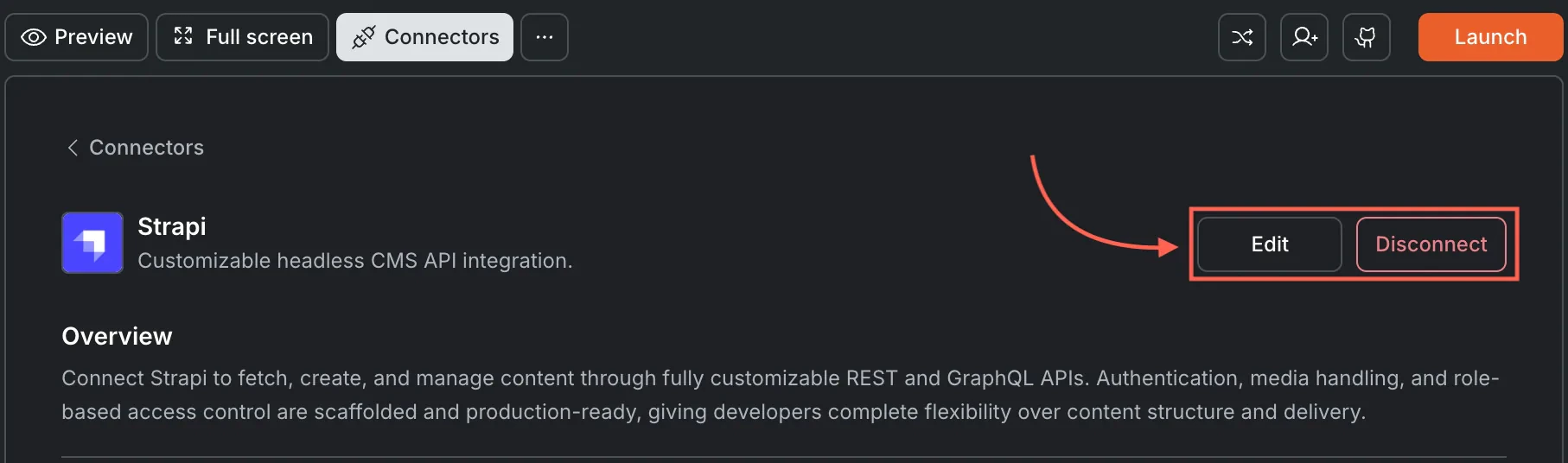
A green dot appears next to Strapi when the connection is active.Update or disconnectOpen Connectors and click the Strapi card. Click Edit to update your credentials or Disconnect to remove the integration from this task.
Strapi card showing Edit and Disconnect buttons.Strapi card showing Edit and Disconnect buttons.

Set up your Strapi instance

Skip this section if you already have a running Strapi instance with the MCP plugin installed.
The MCP plugin is required for both Strapi Cloud and self-hosted projects.
Option A: Strapi Cloud
  1. Go to Strapi Cloud and create an account.
  2. Connect your repository from GitHub or GitLab, or pick a default template.
  3. Deploy from the cloud dashboard.
  4. Continue to Install the MCP plugin below.
Option B: Self-hosted Create a new Strapi project locally:
npx create-strapi@latest
Answer the setup questions and wait for installation to complete. Install the MCP plugin Inside your Strapi project folder:
npm install @sensinum/strapi-plugin-mcp
Then update config/plugins.ts:
module.exports = ({ env }) => {
  const allowedIPs = env('MCP_ALLOWED_IPS');
  const ipConfig = !allowedIPs
    ? '*'
    : allowedIPs === '*'
      ? '*'
      : allowedIPs.split(',').map(ip => ip.trim());

  return {
    mcp: {
      enabled: true,
      config: {
        session: {
          type: 'memory',
          max: 20,
          ttlMs: 600000,
          updateAgeOnGet: true
        },
        allowedIPs: ipConfig,
      }
    }
  };
};
Build and start your project:
npm run build && npm run develop
Strapi starts at http://localhost:1337. For Strapi Cloud, commit and push to trigger deployment. Create content types and set permissions
  1. Open the Strapi Admin Panel.
  2. Go to Content-Type Builder and create your content types (e.g., Blog, Product, Page).
  3. Add fields and save.
  4. Go to Content Manager and add sample records.
  5. Go to Settings > Users & Permissions > Roles.
  6. Select the Public role and enable find and findOne for your content types.
  7. Save.

Get your API token

Open Strapi documentation - how to create an API token
  1. In your Strapi Admin Panel, go to Settings > API Tokens.
  2. Click Create new API Token.
  3. Set a name, duration, and type, then save.
  4. Copy the token - you will paste it into the Connect popup in Rocket.
You will also need your Strapi project URL (e.g., https://your-project.strapiapp.com).
Never paste your API token directly into chat. Always use the secure connection popup. If a token is ever exposed, revoke it from the Strapi Admin Panel and create a new one.

Example prompts

What you wantPrompt to use
Blog listingShow all articles from my Strapi blog content type with thumbnails and dates.
Article detail pageWhen a user clicks an article, show the full rich-text body and author bio from Strapi.
Documentation siteBuild a docs site with sidebar navigation from my Strapi docs collection.
Product catalogCreate a product grid from Strapi with images, prices, and a detail page for each item.
Dynamic page sectionsRender pages from Strapi page-sections with hero, features, and CTA block types.
SearchAdd a search bar to my Strapi blog that filters articles by title and content.
Category filterAdd category tabs to my Strapi product listing that filter items by type.
PaginationAdd pagination to my Strapi blog listing, showing 12 posts per page.
Image galleryDisplay images from my Strapi media library in a responsive masonry grid.

Tips

  • Your API token is stored securely. Rocket encrypts it at rest and never exposes it in client-side code.
  • Strapi must be publicly accessible. Your instance needs to be reachable from the internet. Local-only instances will not work unless tunnelled.
  • One Strapi project per task. Each Rocket task connects to one set of Strapi credentials. Use different tasks for different Strapi instances.
  • Content deletion happens in Strapi. Rocket can create and update records, but delete content and assets directly from your Strapi admin panel.
  • Use the right token type. Full Access works for development. Use a Read-only token for production apps that only display content.

What’s next?

Directus

Comparing headless CMS options? See how Directus works with Rocket.

Supabase

Pair Strapi content with Supabase auth and user management.

Resend

Send notification emails when new content is published from Strapi.

All connectors

Browse every available integration.